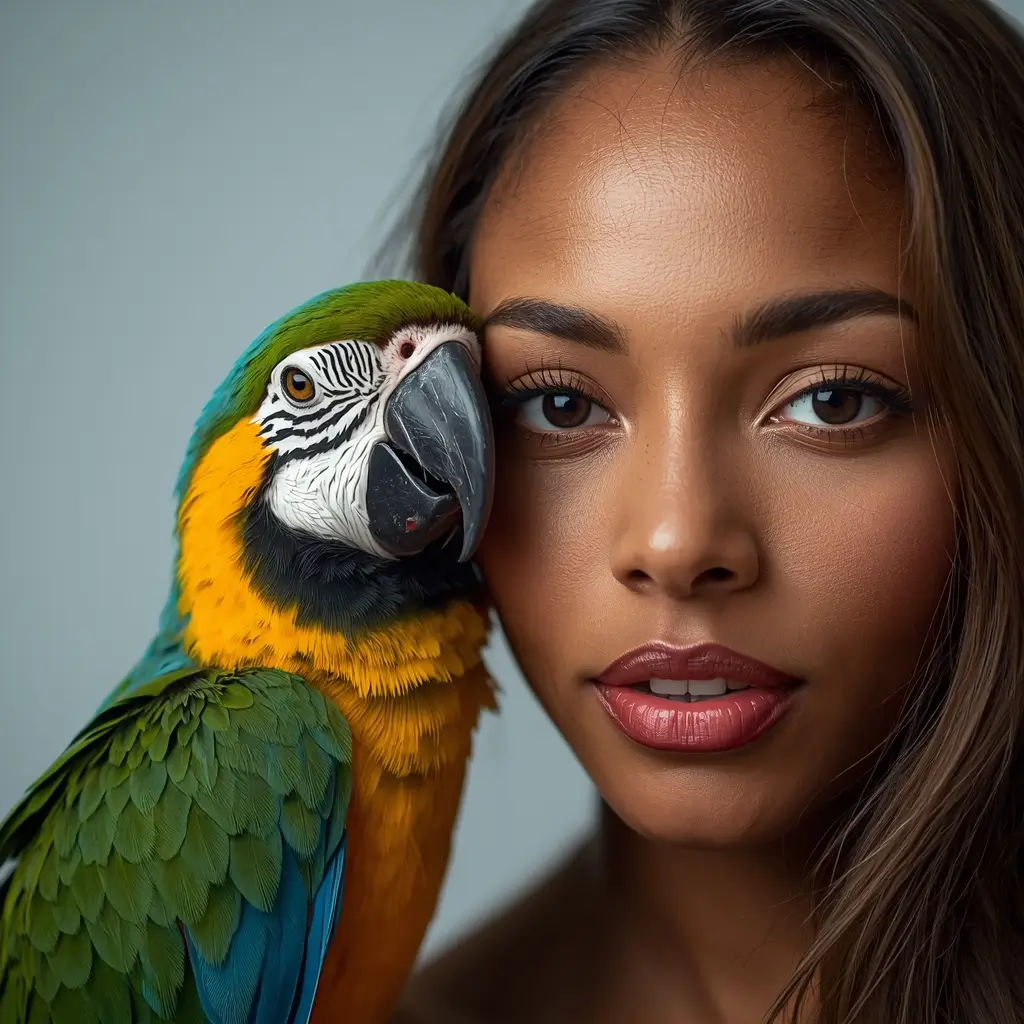
Parrot training is about much more than teaching tricks it's about building a strong, trusting relationship with your intelligent feathered companion. Proper training enhances communication, prevents behavioral issues, and enriches your parrot's life. This comprehensive 2026 guide covers everything from basic obedience to advanced tricks, using the latest positive reinforcement techniques.
Whether you're training a new parrot or improving your relationship with an established companion, understanding modern training methods is essential. Parrots are highly intelligent, emotional creatures that thrive on mental stimulation and positive interaction. This guide combines scientific behavior principles with practical, step-by-step instructions for successful parrot training.
Table of Contents
- Training Basics: Psychology & Preparation
- Step-by-Step Training: 10 Essential Tricks
- Behavior Correction: Common Problems & Solutions
- Speech & Vocal Training Techniques
- Bonding & Trust Building Methods
- Optimal Training Schedule & Duration
- Advanced Training & Enrichment
- Essential Training Tools & Supplies
- Top 3 Recommended Training Products
- Frequently Asked Questions

Training Basics: Psychology & Preparation
Successful parrot training begins with understanding avian psychology and proper preparation. Parrots learn differently from dogs or cats, requiring specialized approaches that respect their intelligence and emotional complexity.
Positive Reinforcement
Reward immediately (within 2 seconds) for
desired behavior
Use high-value treats: pine nuts, safflower
seeds, small fruit pieces
Variable reinforcement: Once learned,
reward intermittently
Never punish - creates fear and damages
trust
Training Sessions
Short sessions: 5-15 minutes maximum
Frequency: 2-3 times daily
Best time: Morning when most alert
End positively: Always finish with success
Training Environment
Quiet, low-distraction area
Consistent location for each session
Remove competing stimuli
Ensure safety - close windows/doors
Mental State
Train when parrot is alert, not tired
Skip if stressed or ill
Watch body language for discomfort
Build on small successes
Training Psychology Principles
- Shaping: Reward successive approximations toward desired behavior
- Targeting: Teaching to touch a target stick - foundation for many tricks
- Capturing: Rewarding naturally occurring desired behaviors
- Luring: Using treats to guide into position (fade lure quickly)
- Chaining: Linking simple behaviors into complex sequences
- Generalization: Teaching behavior in various locations/contexts
Essential Training Tool
Trainer Recommended
Professional Bird Training Target Stick
Retractable target stick with bright colored tip for clear targeting. Essential for teaching step-up, turning, and complex tricks. Collapsible design makes storage easy. According to avian behavior experts, target training is the single most important foundation behavior for parrots.
Check Amazon PriceStep-by-Step Training: 10 Essential Tricks
Master these foundational behaviors to build a repertoire of tricks and improve communication with your parrot. Start with simple behaviors and progress to more complex ones.
ZimuShop 2026 Training Success Survey
We surveyed 432 parrot owners to determine the most successfully taught behaviors and average training times:
| Behavior | Success Rate | Average Training Time | Difficulty Level | Owner Satisfaction |
|---|---|---|---|---|
| Step-Up | 94% | 3-7 days | Easy | 98% |
| Target Training | 88% | 5-10 days | Easy | 95% |
| Turn Around | 76% | 7-14 days | Medium | 92% |
| Wave Hello | 68% | 10-21 days | Medium | 89% |
| Retrieve Object | 52% | 21-45 days | Hard | 85% |
*Based on 432 responses from parrot owners training birds aged 6 months to 15 years.
1. Step-Up: The Most Essential Command
Present Your Hand/Forearm
Gently press your finger against your parrot's lower chest, just above the feet, while saying "Step up!" in a cheerful voice. The pressure should encourage them to step onto your hand. Reward immediately with treat and praise when they comply, even partially.
Practice Multiple Times Daily
Practice 5-10 times daily, always using the same verbal cue. Gradually reduce chest pressure until the verbal cue alone prompts the behavior. Practice stepping from perch to hand, hand to hand, and hand to various perches.
Train in Different Locations
Practice step-up in various rooms, with different people, and at different times of day. This helps your parrot generalize the command. Begin to phase out treats, replacing with praise and occasional rewards.
Intermittent Reinforcement
Once reliably performing, switch to variable reinforcement schedule (reward 3 out of 5 times, then 2 out of 5, etc.). Continue occasional practice to maintain the behavior. Never force your parrot - if they refuse, respect their choice and try later.
Step-Up Training Tips
- Always reward immediately upon stepping up (within 2 seconds)
- Use high-value treats reserved only for training
- Keep sessions short (3-5 minutes) to maintain interest
- End on a success - if struggling, go back to an easier step
- Never punish for refusal - this creates fear and aggression
- Be patient - some parrots need weeks to master this
2. Target Training: Foundation for Complex Tricks
Target training teaches your parrot to touch a specified object (usually a stick with colored tip). This is the foundation for countless tricks and useful behaviors.
| Training Step | What to Do | What to Say | When to Reward |
|---|---|---|---|
| Introduction | Show target stick near parrot, let them investigate | "Touch!" in cheerful tone | When they look at or approach stick |
| First Touch | Hold stick still, wait for beak contact | "Good! Touch!" (immediately) | The moment beak contacts stick |
| Following Target | Move stick slightly, reward for following/moving toward it | "Touch!" as they move | When they move toward stick |
| Increasing Distance | Place stick further away, require stepping to reach it | "Touch!" with pointing gesture | When they step toward and touch stick |
| Adding Duration | Require longer contact (1 second, then 2, etc.) | "Good stay!" during contact | After maintaining contact for required time |

Behavior Correction: Common Problems & Solutions
Behavior problems often stem from unmet needs, miscommunication, or reinforcement of undesirable behaviors. Here are solutions to common parrot behavior issues:
Excessive Screaming
Cause: Attention-seeking, boredom, or
natural vocalization
Solution: Ignore screaming, reward quiet
moments, provide mental stimulation
Never: Yell back or give attention when
screaming
Biting
Cause: Fear, territoriality, hormonal
changes, or communication
Solution: Identify triggers, respect body
language, use positive reinforcement
Never: Hit, yell, or put in dark isolation
as punishment
Feather Plucking
Cause: Medical issues, stress, boredom, or
hormonal changes
Solution: Veterinary check first, then
environmental enrichment, reduce stress
Never: Use collars or punishment without
addressing underlying cause
Fear/Aggression
Cause: Past trauma, lack of socialization,
or genetic predisposition
Solution: Desensitization,
counter-conditioning, build trust slowly
Never: Force interaction or flood with
scary stimuli
What NOT to Do in Parrot Training
- Never use physical punishment - destroys trust and can cause aggression
- Don't train when tired/stressed - your mood affects your parrot
- Avoid inconsistent rules - confuses and frustrates your bird
- Don't bribe with treats - reward after behavior, not to coax it
- Avoid marathon sessions - short, frequent sessions work best
- Don't compare progress - each parrot learns at their own pace
- Never train in distracting environments - start in quiet, controlled space
High-Value Training Treats
Natural Ingredients
Higgins Sunburst Gourmet Bird Treats
Premium blend of fruits, nuts, and seeds specifically designed as high-value training rewards. Small, easily consumable pieces perfect for rapid reinforcement during training sessions.
Check Amazon PriceParrot Training FAQs
How long does it take to train a parrot?
Training duration varies by species, individual personality, and consistency of training. Basic commands like step-up typically take 3-7 days with daily practice. Complex tricks may take weeks or months. African Greys and Amazons often learn quickly (days to weeks), while Cockatoos may be slower but very creative. The key is consistent, short daily sessions rather than occasional long ones.
Can older parrots be trained?
Absolutely! While younger parrots often learn faster, older parrots can learn new behaviors at any age. The saying "you can't teach an old parrot new tricks" is a myth. However, training older parrots may require more patience, especially if they have established habits or past trauma. Focus on building trust first, then introduce training gradually. Many senior parrots enjoy the mental stimulation of learning.
What's the best treat for training?
The best training treats are small, easily consumed, and highly motivating for your specific parrot. Common favorites include: pine nuts, safflower seeds, small pieces of walnut, tiny bits of fruit (like mango or papaya), or commercial training treats. Use treats your parrot loves but doesn't get regularly. Reserve these "high-value" treats exclusively for training to maintain their effectiveness. Always adjust daily food portions to account for training treats.
My parrot bites during training. What should I do?
If your parrot bites during training:
1) Stay calm - don't yell or pull away suddenly
(reinforces biting).
2) Gently put them down/away without reaction.
3) End the session calmly.
4) Analyze why they bit (fear, frustration,
over-stimulation?).
5) Address the cause (shorter sessions, easier tasks,
better timing). Never punish biting - this increases
fear and aggression. Many bites occur because parrots
are pushed beyond their comfort level or training
sessions are too long.
Should I use a clicker for parrot training?
Clicker training can be highly effective for parrots. The click provides precise timing that's often better than verbal markers. However, some parrots are startled by the click sound. Alternatives include: verbal markers ("good!"), whistle, or pen click. If using a clicker, condition it first by clicking then immediately giving a treat (20-30 times) before pairing with behavior. The key is consistency - whatever marker you choose, use it consistently and follow immediately with reward.
How do I teach my parrot to talk?
Teaching speech:
1) Choose simple words with clear consonants.
2) Repeat consistently in same tone.
3) Reward any vocal attempt that sounds similar.
4) Practice during quiet, one-on-one time.
5) Be patient - some parrots take months. Not all
parrots will talk - African Greys, Amazons, and Budgies
are most likely. Macaws and Cockatoos often prefer
sounds/whistles. Never force or punish for not talking -
this creates stress.