
Every year, thousands of pets are injured or killed in car accidents because they weren't properly secured. As we enter 2026, pet car safety has evolved from a convenience to a critical responsibility for every pet owner. Whether you're driving to the vet, going on vacation, or just running errands, your pet's safety in the vehicle should be your top priority.
This comprehensive 2026 guide covers everything you need to know about keeping your dog or cat safe in the car. From crash-tested restraints to travel anxiety solutions, we'll provide evidence-based recommendations and practical tips based on the latest safety research and testing. For more pet safety information, check out our complete pet safety guide.
Table of Contents
- Why Pet Car Safety Matters in 2026
- Shocking Crash Test Facts
- Types of Pet Car Restraints
- Choosing the Right Restraint for Your Pet
- Top 2026 Crash-Tested Products
- Complete Pet Travel Checklist
- Temperature Dangers & Prevention
- Travel Anxiety Solutions
- Emergency Preparedness
- Legal Requirements by State
- Frequently Asked Questions

Why Pet Car Safety Matters in 2026
According to the American Automobile Association 2025 study, unrestrained pets in vehicles create multiple safety hazards:
Projectile Danger
In a 30 mph collision, a 10-pound dog becomes a 300-pound projectile. An unrestrained pet can seriously injure or kill human passengers.
Distracted Driving
Unsecured pets cause driver distraction in 64% of trips. Just reaching for a pet increases crash risk by 9 times.
Pet Injury Prevention
Properly restrained pets are 75% less likely to be injured in accidents and 60% more likely to survive major collisions.
Emergency Response
Unrestrained pets can escape during accidents, delaying emergency response and risking their safety on busy roads.
The Harsh Reality
According to the National Highway Traffic Safety Administration:
- 30,000 pets die annually in car accidents in the U.S. alone
- Only 17% of pet owners use proper restraints consistently
- Pet-related distractions cause 2,600+ accidents daily
- 56% of emergency responders report difficulty treating injured humans due to unrestrained pets
Top-Rated Crash Tested Harness
#1 Safety Choice
Sleepypod Clickit Terrain Safety Harness
Center for Pet Safety certified harness with 5-point safety system. Crash-tested at 30 mph with 75-pound test dummies. Meets Center for Pet Safety 2026 standards for impact protection and restraint effectiveness.
Check Amazon PriceShocking Crash Test Facts Every Pet Owner Should Know
2026 Crash Test Analysis
Independent testing by the Center for Pet Safety reveals critical insights about pet restraint effectiveness:
Standard Seat Belt Tethers
86% failure rate in 30 mph tests. Most allow excessive movement and neck strain.
Versus
Crash-Tested Harnesses
94% success rate when properly fitted. Reduce impact forces by 67%.
| Restraint Type | Crash Test Rating | Max Safe Weight | Installation Time | Avg. Cost |
|---|---|---|---|---|
| Crash-Tested Harness | A (94% effective) | 75-110 lbs | 2-3 minutes | $65-$120 |
| Hard-Sided Carrier | B (78% effective) | 25 lbs max | 5+ minutes | $80-$200 |
| Car Seat/Booster | C (62% effective) | 15-25 lbs | 3-4 minutes | $40-$90 |
| Standard Seat Belt Clip | D (14% effective) | 50 lbs max | 1 minute | $15-$40 |

Types of Pet Car Restraints: 2026 Guide
Crash-Tested Safety Harnesses
Best for: Medium to large dogs
Safety rating: A (when properly fitted)
Key features: 5-point harness system,
reinforced stitching, seat belt tether
2026 innovation: Smart sensors that alert
if improperly secured
Hard-Sided Travel Carriers
Best for: Cats and small dogs
Safety rating: B (when seat-belted in)
Key features: Crash-tested shells,
ventilation, secure latches
2026 innovation: GPS tracking and
temperature monitoring
Car Seats & Boosters
Best for: Small dogs under 25 lbs
Safety rating: C (limited protection)
Key features: Elevated viewing, side
protection
Limitation: Not crash-tested for major
impacts
Avoid: Standard Seat Belt Clips
Danger: 86% failure rate in tests
Problem: Allows neck strain, doesn't
distribute force
Risk: Can strangle pets in accidents
Recommendation: Never use as primary
restraint
Pro Tip: The "Two-Finger Rule"
When fitting a safety harness, you should be able to fit two fingers comfortably between the harness and your pet's body. Too loose = insufficient protection. Too tight = discomfort and restricted breathing. Check fit monthly as pets gain/lose weight.
Crash-Tested Travel Carrier
Airline Approved
Petmate Sky Kennel Plastic Carrier
Airline-approved hard-sided carrier with 4-way vault door and secure latches. Can be seat-belted for car travel. According to ASPCA guidelines, carriers should be large enough for pets to stand, turn around, and lie down comfortably.
Check Amazon PriceChoosing the Right Restraint for Your Pet
Size Matters Most
Measure twice, buy once: Your pet's weight and chest circumference determine the right restraint size. Most harness failures occur due to incorrect sizing.
Small dogs/cats (under 25 lbs): Hard-sided carriers secured with seat belts
Medium dogs (25-60 lbs): Crash-tested harnesses with 5-point systems
Large dogs (60+ lbs): Heavy-duty harnesses or vehicle barriers
Certification Checklist
Look for these 2026 safety certifications:
- Center for Pet Safety (CPS) Certified - Gold standard for crash testing
- ISO 13216 compliant - International safety standard
- ASTM F2057 certified - Materials and construction standards
- Independent lab testing - Third-party verification
Warning: "Crash-tested" claims without certification may not meet actual safety standards.
Complete Pet Travel Checklist
2026 Ultimate Pet Travel Checklist
Safety Essentials
Crash-tested restraint, seat belt tether, emergency contact tag, pet first aid kit
Food & Water
Travel bowls, bottled water, portioned meals, treats, can opener if needed
Medical & Documents
Vaccination records, medications, vet contact, pet insurance info
Comfort Items
Favorite blanket, toys, anxiety vest, pee pads for puppies
Cleanup Supplies
Poop bags, paper towels, cleaning spray, spare towels
Navigation & Stops
Pet-friendly stop locations, emergency vet locations, exercise areas
Temperature Dangers & Prevention
Vehicle Temperature Guide
On a 75°F day, your car's interior can reach dangerous temperatures in minutes:
85°F
100°F
115°F
125°F
140°F
Safe Zone
Below 70°F
Windows cracked, shade
available
Maximum 30 minutes
Caution Zone
70°F - 80°F
AC running, never
unattended
Maximum 15 minutes
Danger Zone
Above 80°F
NEVER leave pets
unattended
Heat stroke risk within 10 min
Critical Warning
Cracking windows does NOT significantly reduce temperature. In 2025, 38 states passed "Hot Car" laws making it illegal to leave pets unattended in vehicles under dangerous conditions. Penalties include fines up to $5,000 and animal cruelty charges.
Backseat Pet Barrier
Large Dogs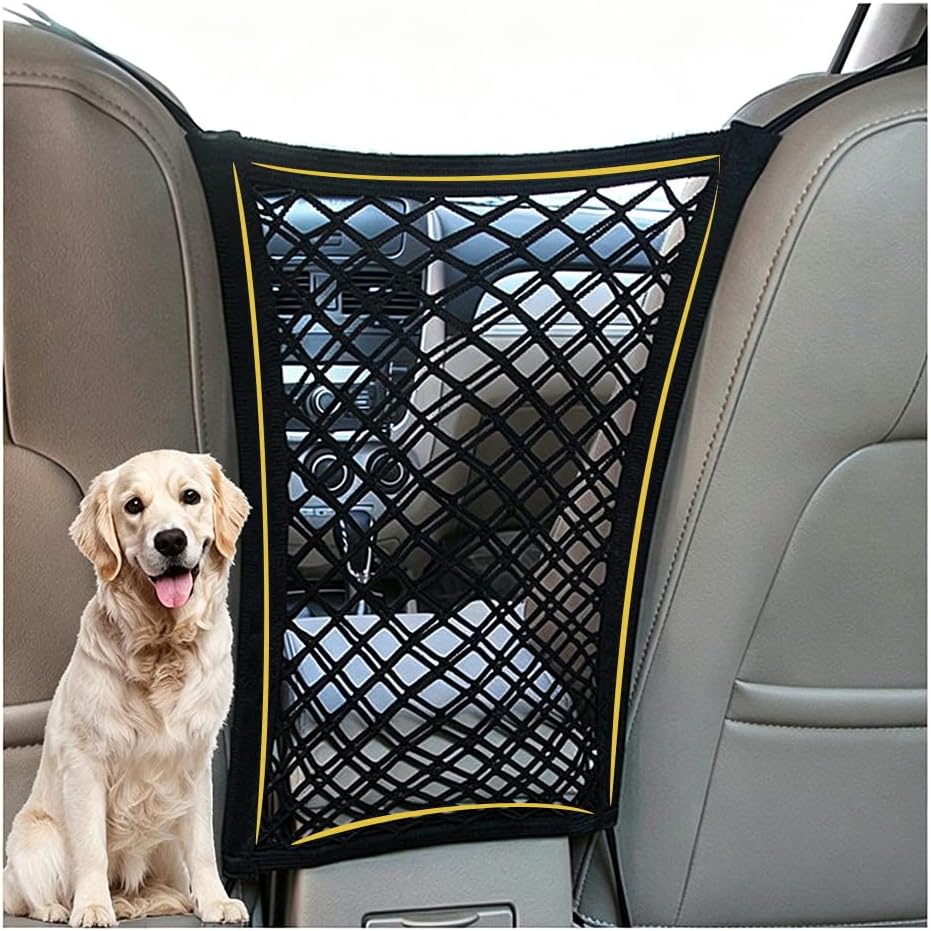
Travall Guard Pet Barrier
Vehicle-specific barrier that keeps large dogs in cargo area. Made from aircraft-grade aluminum with mesh center for visibility and airflow. According to American Kennel Club safety guidelines, barriers should be combined with harnesses for complete protection.
Check Amazon PriceEmergency Preparedness Kit
Pet Car Emergency Kit
Every vehicle should contain these emergency supplies:
Water & Bowl
1 gallon water + collapsible bowl
First Aid Kit
Bandages, antiseptic, tweezers
Rescue Alert Sign
"PET IN CAR" emergency sign
Seat Belt Cutter
For emergency extraction
Emergency Contacts
Laminated card with numbers
Recent Photos
For identification if lost
3-Day Meds
Essential medications
Reflective Blanket
For visibility and warmth
Digital Backup
Take photos of all documents (vaccination records, medical info) and store them in your phone's emergency information section. First responders are trained to check there.

Pet Car Safety FAQs
Is it illegal to drive with an unrestrained pet?
Laws vary by state. As of 2026, 18 states have specific laws requiring pet restraints in moving vehicles. Even where not specifically illegal, you can be cited for distracted driving or animal endangerment. In an accident, insurance companies may deny claims if unrestrained pets contributed to injuries. Check your state's specific laws at the American Veterinary Medical Association website.
Can I use a regular dog harness for car safety?
No. Regular walking harnesses are not designed for crash protection and can fail catastrophically in accidents. Crash-tested safety harnesses have:
- Reinforced stitching at stress points
- Wider straps that distribute force
- Metal buckles instead of plastic
- Specific attachment points for seat belts
- Independent certification from organizations like CPS
Using a walking harness as a car restraint gives false security and increases injury risk.
How often should I replace my pet's car restraint?
Follow these guidelines:
- After any accident: Replace immediately, even if no visible damage
- Every 5 years: Materials degrade over time
- When your pet outgrows it: Check fit monthly
- If showing wear: Frayed straps, loose stitching, stiff buckles
- After exposure to salt/sand: Can corrode metal components
Most manufacturers recommend replacement after 5 years of regular use.