
Emergencies don't wait for convenient times and when disaster strikes, your pet's safety depends on your preparation. A comprehensive pet emergency kit isn't just a collection of supplies; it's a lifeline that could save your pet during natural disasters, evacuations, or unexpected crises. In this complete 2026 guide, we'll walk you through building an emergency kit that meets current FEMA and Red Cross standards.
According to the U.S. Department of Homeland Security, only 40% of pet owners have an emergency plan for their animals. Don't let your pet become a statistic. This guide will help you create a comprehensive emergency kit tailored to your pet's specific needs. For additional pet safety resources, explore our complete pet first aid guide.
Table of Contents

Why Every Pet Needs an Emergency Kit
Natural disasters increased by 74% globally between 2000 and 2024, according to UN data. From wildfires and hurricanes to floods and earthquakes, emergencies are becoming more frequent and severe. Your pet emergency kit ensures you can care for your animal when:
- Evacuation orders are issued with little warning
- Power outages last for days or weeks
- Veterinary services are unavailable or overwhelmed
- Supply chains are disrupted
- You become separated from your pet during chaos
Did You Know?
During Hurricane Katrina, an estimated 250,000 pets were left behind because emergency shelters didn't accept animals. The Pets Evacuation and Transportation Standards (PETS) Act of 2006 now requires emergency plans to include pets, but preparedness still falls on individual owners. Having a proper emergency kit could mean the difference between evacuation with your pet or heartbreaking separation.
Recommended Emergency Kit Starter
Editor's Choice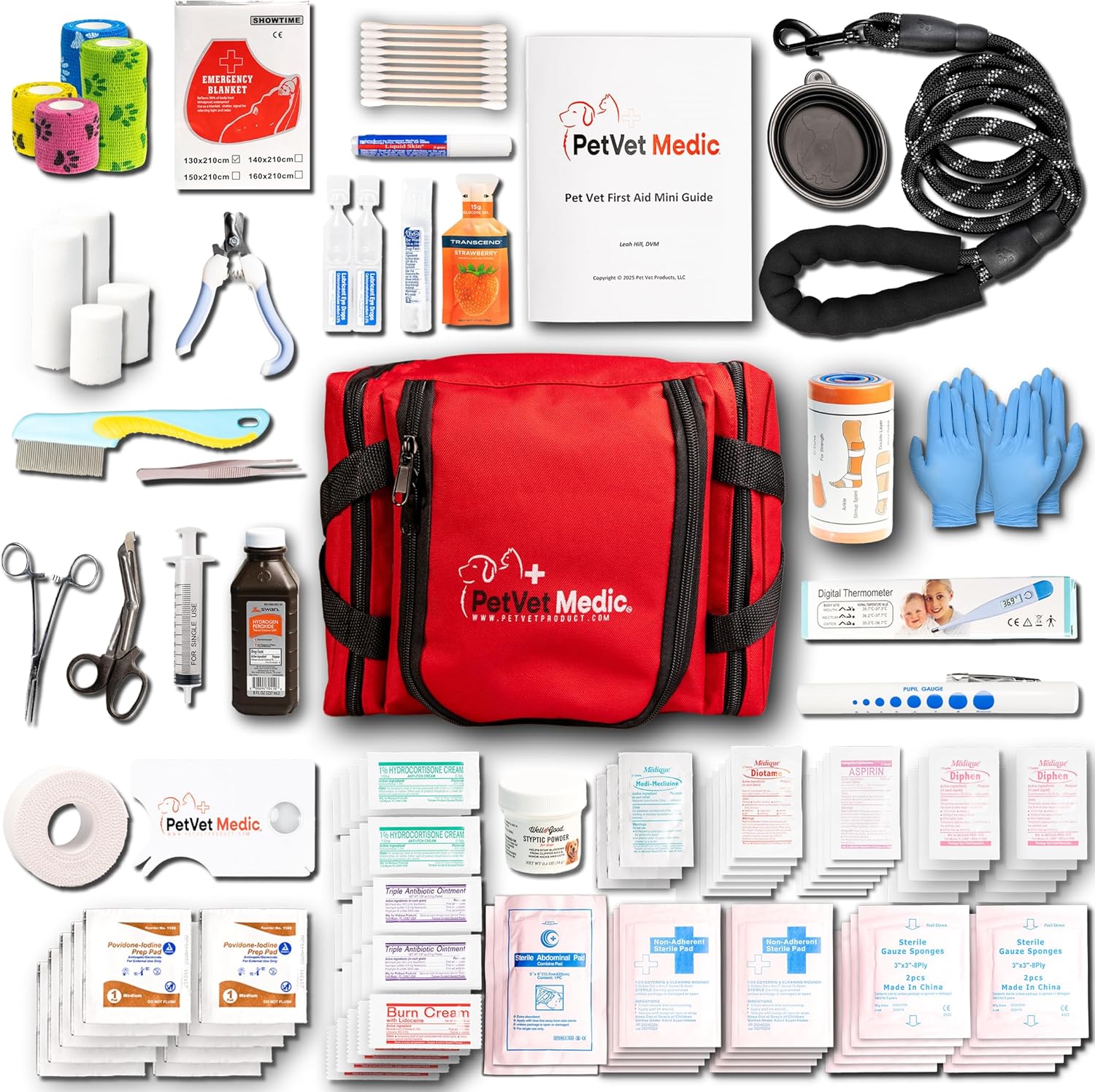
Comprehensive Pet First Aid Kit
200+ piece veterinary-grade kit with emergency blanket, muzzle, splint, antiseptics, and pet first aid guide. Waterproof case and organized compartments. Perfect foundation for your emergency kit. For additional emergency tools, see our pet safety product recommendations.
Check Amazon PriceEssential Pet Emergency Supplies
Your pet emergency kit should be tailored to your specific pet(s), but these core supplies form the foundation of any comprehensive kit:
Complete Emergency Kit Checklist
Food & Water Critical
3-day minimum supply (14-day recommended): Non-perishable food, manual can opener, collapsible bowls, water purification tablets, bottled water (1 gallon per pet per day)
Medical Supplies Critical
First aid kit: Gauze, bandages, antiseptic wipes, tweezers, thermometer, emergency blanket, pet-safe pain relievers (vet-prescribed), current medications (2-week supply)
Identification Critical
Proof of ownership: Current photos, microchip number/company, vaccination records, medical history, contact information for you and emergency contacts
Safety & Comfort Important
Secure carrier/crate: Properly sized with identification, leash/harness, favorite toy/blanket, pet waste bags, litter/litter box (cats), disposable gloves
Special Needs Recommended
Pet-specific items: Puppy pads, calming supplements, grooming supplies, muzzle (for injured/scared pets), booties (for debris/hot surfaces), pet life jacket
Food & Water: The Foundation of Survival
During emergencies, access to clean water becomes the most critical need. Follow these guidelines:
Water Storage
Minimum: 3 days (1 gallon per pet daily)
Recommended: 2 weeks supply
Store in food-grade containers, replace every 6 months.
Include water purification tablets or portable filter.
Emergency Food
Rotate every 3-6 months
Canned food (pop-top lids), freeze-dried options, or
vacuum-sealed dry food. Include manual can opener. Store in
waterproof container with oxygen absorbers.
Medication Storage
2-week minimum supply
Include copies of prescriptions. Store in waterproof
container with silica gel packets. Note expiration dates and
rotation schedule.
Document Protection
Waterproof document case
Include vaccination records, medical history, microchip
info, and recent photos. Digital copies on USB drive and
cloud storage.

Emergency Food Supply
Long Shelf Life
MyDog Emergency Food Supply
Freeze-dried emergency food with 5-year shelf life. Just add water. Nutritionally complete with probiotics. Includes 14 individual meal packs. According to American Red Cross guidelines, pets need 1 gallon of water daily during emergencies.
Check Amazon PricePet-Specific Emergency Kits
Different pets have unique needs. Customize your emergency kit based on your pet's species, age, and health conditions:
| Pet Type | Special Considerations | Additional Supplies |
|---|---|---|
| Dogs | Exercise needs, temperature sensitivity, larger food/water requirements | Long leash (15+ ft), stake/tie-out, booties, life jacket, grooming brush, poo bags |
| Cats | Stress sensitivity, litter requirements, hiding behavior | Disposable litter boxes, litter, calming pheromones, secure carrier, familiar bedding |
| Small Animals | Temperature regulation, specialized diets, fragile nature | Travel cage, bedding material, species-specific food, water bottle, hide box |
| Birds | Respiratory sensitivity, stress-induced illness, flight risk | Travel cage, cage cover, cuttlebone, spray millet, avian first aid supplies |
| Reptiles | Temperature dependence, UV requirements, specialized habitat | Heat packs (non-electric), insulated carrier, spray bottle, species-specific food |
Critical Medical Considerations
If your pet has ongoing medical conditions, your emergency kit must include:
- Extended medication supply: Minimum 2-week, ideally 1-month supply
- Medical records: Complete history, test results, vet contact information
- Specialized equipment: Insulin syringes, glucose monitor, special diet foods
- Emergency vet list: Contact information for veterinary specialists familiar with your pet's condition
- Treatment instructions: Written protocols for emergency caregivers
Consult your veterinarian about emergency care specific to your pet's health needs.
Kit Storage & Maintenance
An emergency kit is useless if you can't access it quickly. Follow these storage guidelines:
Emergency Kit Maintenance Schedule
- Check battery-powered items
- Test flashlight/radio
- Check medication expiration
- Verify contact information
- Rotate food/water supplies
- Check clothing/fit (pet)
- Update medical records
- Test carrier functionality
- Replace all batteries
- Check first aid supplies
- Update pet photos
- Review evacuation plan
- Conduct practice evacuation
- Update all documents
- Replace water stores
- Check with vet about updates
Creating Your Pet Evacuation Plan
Your pet emergency kit is only part of the equation. A comprehensive evacuation plan ensures you can implement it effectively:
Identification & Research
Microchip your pet and keep registration current. Research pet-friendly hotels, shelters, and veterinarians along potential evacuation routes. Create digital and physical copies of all important documents.
Preparation Phase
Bring pets indoors immediately. Fill carriers with familiar bedding. Load emergency kits into vehicle. Contact evacuation locations to confirm availability. Ensure pets are wearing collars with current ID tags.
Immediate Action
Secure pets in carriers before loading vehicle. Take photos of pets for identification. Leave notes for rescuers if you must leave pets behind (last resort). Follow designated evacuation routes.
Safety Protocols
Never leave pets in vehicles unattended. Keep dogs leashed at all times. Maintain normal routines as much as possible. Monitor pets for stress signs and provide comfort items.
Preparing for Different Disasters
Different emergencies require specific preparations. Tailor your plan based on local risks:
Wildfires
Key Preparations: N95 masks for pets (specially designed), protective booties, evacuation route planning, early evacuation decision. Pets are particularly vulnerable to smoke inhalation.
Hurricanes/Floods
Key Preparations: Pet life jackets, waterproof documents, elevated sleeping areas, evacuation before mandatory orders. Never leave pets tied up during floods.
Earthquakes
Key Preparations: Secure heavy items near pet areas, identify safe spots, pet first aid for cuts from broken glass, post-disaster search plan if separated.
Winter Storms
Key Preparations: Extra bedding, pet-safe heating pads (non-electric), paw protection, increased food for warmth, plan for power outage heating alternatives.
A Real-Life Success Story: Luna's Hurricane Evacuation
When Hurricane Michael approached Florida in 2023, Sarah and her Labrador Luna were prepared:
- 3 days before landfall: Sarah checked Luna's emergency kit, confirmed pet-friendly hotel reservations 200 miles inland
- 48 hours before: Loaded emergency supplies into SUV, including Luna's favorite blanket and toys
- 24 hours before: Early evacuation avoided traffic, arrived safely at hotel
- During storm: Luna stayed calm with familiar items while the storm passed
- Aftermath: Two-week wait before returning home emergency supplies sustained them comfortably
"Our emergency kit made what could have been a traumatic experience manageable," Sarah shared. "Luna never missed a meal, had her medications, and felt secure with her familiar items."
Pet Identification System
GPS Tracking
Fi Smart Dog Collar
GPS tracking collar with 3-month battery life, escape alerts, and activity monitoring. Waterproof design with real-time location tracking via smartphone app. Essential for post-disaster reunification. The AVMA recommends multiple forms of identification for disaster preparedness.
Check Amazon PriceDigital Emergency Preparedness
In 2026, digital tools enhance traditional emergency preparedness:
Digital Document Storage
Cloud backups: Google Drive, Dropbox, or
specialized pet apps
Contents: Medical records, photos,
microchip info, emergency contacts
Access: Ensure offline access capabilities
Emergency Apps
FEMA app: Alerts, shelter locations,
preparedness tips
Pet first aid apps: Step-by-step emergency
guidance
Vet telehealth: Remote consultations during
crises
Smart Identification
QR code tags: Instant access to medical
records
GPS collars: Real-time tracking if
separated
Digital lost pet networks: Automated alerts
to local shelters
Communication Plan
Emergency contacts: Designated out-of-area
contact person
Reunification plan: Where to meet if
separated
Social media groups: Local pet emergency
networks
Your 72-Hour Emergency Kit Challenge
This weekend, complete these 5 steps:
- Gather basic supplies: 3-day food/water, leash, carrier, bowls
- Collect documents: Photos, medical records, contact information
- Identify evacuation locations: Research 3 pet-friendly options
- Create digital backups: Scan documents, save to cloud
- Practice loading: Time how long it takes to load pets and supplies
Share your progress with family members and designate specific responsibilities for each person during an emergency.

Additional Emergency Resources
Final Emergency Preparedness Thoughts
Building a comprehensive pet emergency kit and creating a solid evacuation plan is one of the most responsible things you can do as a pet owner. Disasters are stressful enough without worrying about your pet's safety or scrambling for supplies at the last minute.
Remember that emergency preparedness is an ongoing process, not a one-time task. Regular maintenance, practice drills, and updates ensure your plan remains effective when you need it most. Your pet depends on you for safety taking these steps shows how much you value that responsibility.
Start today, even if you begin with just a 72-hour kit. Each item you gather, each document you organize, and each plan you make brings you closer to being truly prepared. For more comprehensive safety planning, explore our complete pet safety resource center.