Every year, thousands of pets are lost, injured, or worse during natural disasters and emergencies because their owners weren't prepared. Pet emergency preparedness isn't just a precaution it's a responsibility that could save your pet's life. In this comprehensive 2026 guide, we'll walk you through every step of creating a complete emergency plan for your pets.
According to the Federal Emergency Management Agency (FEMA), nearly 40% of pet owners don't have an emergency plan for their animals. Don't be part of this statistic. Whether you're facing hurricanes, wildfires, earthquakes, or home emergencies, being prepared makes all the difference.
Table of Contents
- Why Pet Emergency Preparedness Matters
- Building Your Pet Emergency Kit
- Creating Your Pet Evacuation Plan
- Preparing for Specific Disasters
- Pet Identification & Documentation
- Emergency Sheltering Options
- Pet First Aid Basics
- 30-Day Emergency Prep Plan
- Recommended Emergency Products
- Frequently Asked Questions

Why Pet Emergency Preparedness Matters: The Statistics
Pet emergency preparedness goes beyond having extra food and water. It's about comprehensive planning that addresses identification, sheltering, medical needs, and emotional support for your pets during crises. The reality is sobering:
ZimuShop 2026 Emergency Preparedness Survey
We surveyed 1,250 pet owners about their emergency preparedness:
| Preparedness Level | Percentage of Owners | Has Emergency Kit | Has Evacuation Plan | Microchipped Pet |
|---|---|---|---|---|
| Fully Prepared | 18% | 100% | 100% | 94% |
| Partially Prepared | 42% | 65% | 38% | 72% |
| Minimally Prepared | 27% | 22% | 12% | 45% |
| Not Prepared | 13% | 0% | 0% | 28% |
Based on 1,250 responses from pet owners across the United States, February 2026.
The Real Cost of Being Unprepared
During Hurricane Katrina, approximately 44% of people who refused to evacuate did so because they couldn't bring their pets. This led to an estimated 600,000 pets being killed or left behind. Since then, laws like the PETS Act of 2006 have improved disaster planning for animals, but individual preparation remains critical.
Key Takeaway
Start today. Don't wait for a disaster warning. The most common reason pet owners give for not being prepared is "I'll do it later." By then, it may be too late. Even basic preparation significantly increases your pet's chances of survival and reduces stress for both of you during emergencies.
Recommended Emergency Kit
Complete Solution
Pet Emergency First Aid Kit
Comprehensive 112-piece pet first aid kit including emergency blanket, muzzle, splint, antiseptic wipes, bandages, and medical guide. Meets American Red Cross standards for pet emergency care.
Check Amazon PriceBuilding Your Pet Emergency Kit: 2026 Essentials
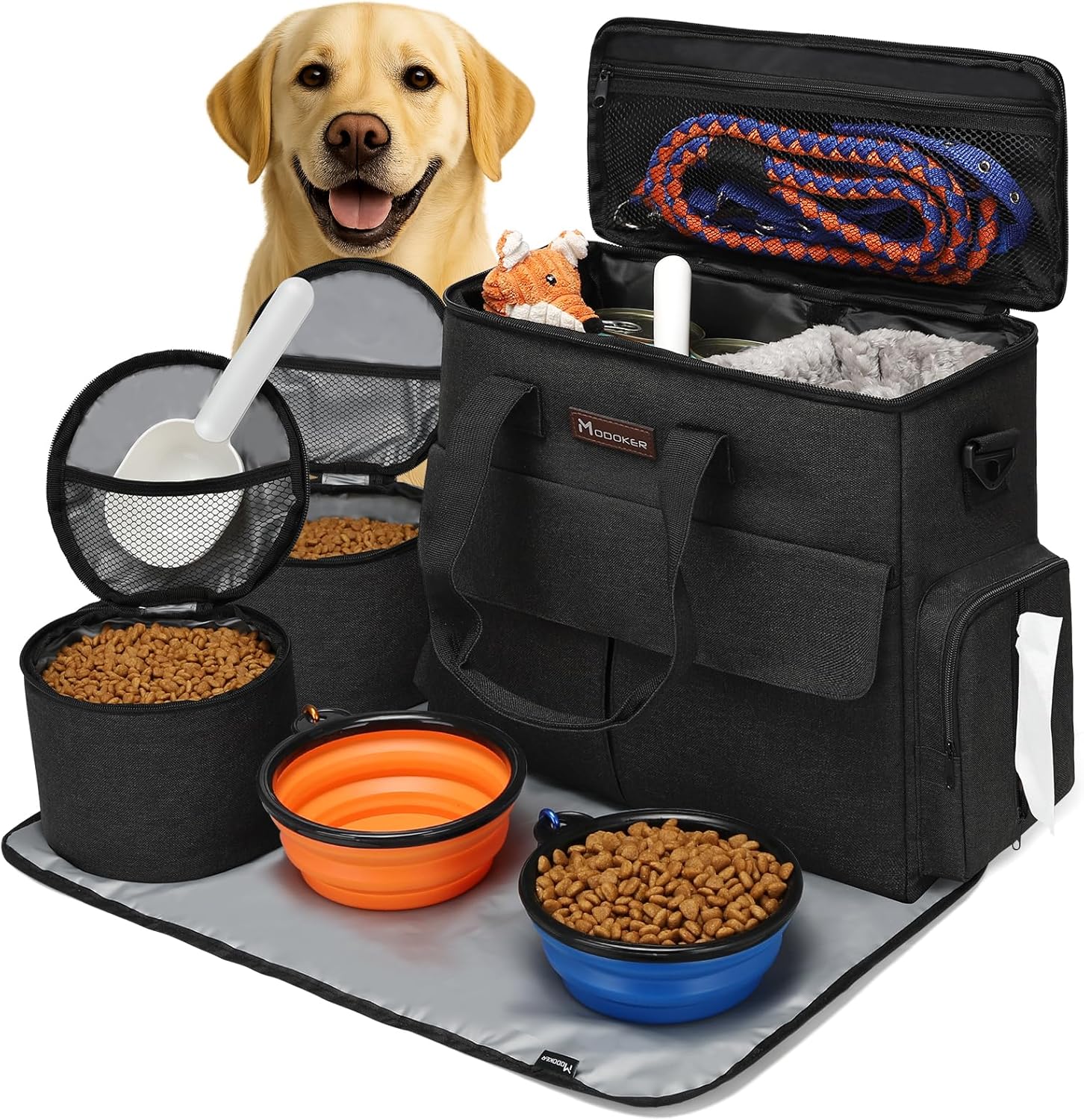
Your pet emergency kit should be portable, waterproof, and contain at least 3-7 days of supplies (14 days if in an earthquake or hurricane zone). Store it in an easily accessible location and check contents every 6 months.
3-day supply
Food & water
Basic first aid
Essential
meds
7-day supply
Complete first aid
Comfort items
Backup
documents
14-day supply
Specialized gear
Multiple
carriers
Evacuation plan
Essential Items Checklist
3-14 Day Supply
- Non-perishable food: Canned or dry food (rotate every 6 months)
- Water: 1 gallon per pet per day (minimum 3 days)
- Bowls: Collapsible food and water bowls
- Manual can opener: For canned food
- Treats: High-value treats for stress relief
First Aid & Medications
- First aid kit: Specifically designed for pets
- Medications: 2-week supply with instructions
- Medical records: Copies in waterproof bag
- Vet contact: Phone numbers and address
- Pet first aid book: Current edition
Shelter and Security
- Leash and harness: Extra sturdy leash
- Carrier/crate: Labeled with contact info
- Bedding: Familiar blanket or bed
- Toys: Familiar comfort items
- Waste supplies: Bags, litter, litter box
Absolute Essentials
- 7-day food supply
- Water (1 gal/day)
- Medications
- Leash & carrier
- Medical records
- First aid kit
Important Additions
- Recent photo
- Comfort items
- Waste supplies
- Manual can opener
- Flashlight & batteries
- Emergency blanket
Recommended Extras
- Pet life vest
- Booties/paw protection
- Portable water filter
- GPS tracker
- Rescue alert stickers
- Hand sanitizer
Special Needs Considerations
Pets with special requirements need additional planning:
| Special Need | Additional Items Required | Planning Considerations |
|---|---|---|
| Senior Pets | Joint supplements, mobility aids, heating pad | Plan for slower evacuation, identify pet-friendly hotels with elevator access |
| Pets with Diabetes | Insulin cooler, extra syringes, glucose monitor | Coordinate with vet for emergency insulin protocol, have hypoglycemia treatment ready |
| Anxious Pets | Thundershirt, calming treats, pheromone spray | Practice evacuation drills, include familiar bedding and toys |
| Exotic Pets | Species-specific carriers, heat sources, specialized food | Research exotic pet shelters in advance, have backup power for heating/cooling |

Creating Your Pet Evacuation Plan: Step-by-Step
An evacuation plan is worthless if you haven't practiced it. Follow these steps to create and implement your plan:
Identify Pet-Friendly Options
- Hotels/motels: Bookmark pet-friendly chains along evacuation routes
- Friends/family: Establish backup locations outside your area
- Shelters: Know which emergency shelters accept pets (many don't)
- Boarding facilities: Have contacts for facilities outside danger zones
Gather Essential Information
- Emergency contacts: Local and out-of-area contacts
- Veterinary information: Primary and emergency vet contacts
- Microchip details: Keep registration current with backup phone numbers
- Evacuation routes: Map multiple routes in different directions
Conduct Regular Drills
- Monthly drills: Practice loading pets into carriers/vehicles
- Time yourself: Aim for under 10 minutes for full evacuation
- Involve family: Assign specific tasks to each family member
- Test equipment: Ensure carriers, leashes, and harnesses are functional
Establish Communication Protocols
- Meeting points: Designate safe meeting locations
- Out-of-area contact: Someone everyone can check in with
- Alert systems: Sign up for local emergency alerts
- Neighbor agreement: Establish pet care help with trusted neighbors
Real-Life Success Story: The Johnson Family
When wildfires threatened their California neighborhood in 2025, the Johnson family's preparation paid off:
- 0-15 minutes: Grabbed pre-packed emergency kits for both dogs and cat
- 15-30 minutes: Loaded pets, important documents, and go-bags into SUV
- 30-45 minutes: Notified out-of-state contact, followed pre-planned route
- Next day: Checked into pre-identified pet-friendly hotel 150 miles away
"Having practiced our evacuation quarterly made all the difference," says Sarah Johnson. "While neighbors were scrambling to find carriers and food, we were safely on the road in under an hour. Our pets stayed calm because they recognized the routine from our drills."
Emergency Pet Carrier
Collapsible Design
TravelPet Collapsible Carrier
Lightweight, collapsible carrier with emergency handle, ventilation panels, and storage pockets. Sets up in seconds and stores flat when not in use. Essential for quick evacuations. According to the Humane Society, carriers should be large enough for pets to stand and turn around comfortably.
Check Amazon PricePreparing for Specific Disasters
Different disasters require specific preparations. Here's what you need to know for the most common emergencies:
Wildfires
Key preparations: N95 masks for pets, identify multiple evacuation routes (wind changes direction), keep pets indoors when air quality is poor, have pet respirator masks ready.
Timeline: Evacuate early don't wait for mandatory orders. Smoke affects pets faster than humans.
Hurricanes & Floods
Key preparations: Pet life jackets, waterproof documents, elevated sleeping areas, identify pet-friendly shelters, prepare for potential separation.
Timeline: Evacuate 48+ hours before storm arrival if in evacuation zone.
Earthquakes
Key preparations: Secure heavy items that could fall on pets, practice "drop, cover, hold on" with pets, have breakaway collars (pets may get caught on debris).
Timeline: Immediate action during shaking, then assess safety before evacuating.
Tornadoes
Key preparations: Identify safe room (interior, no windows), include pets in tornado drills, have carriers in safe room, consider pet identification tattoos as backup.
Timeline: Take shelter immediately when warning issued seconds matter.
Emergency Alert Systems
Register for these critical alert services:
- FEMA's Integrated Public Alert & Warning System (IPAWS)
- Local county/city emergency notification systems
- NOAA Weather Radio with Specific Area Message Encoding (SAME)
- Pet-focused alert apps like PetAlert or Finding Rover
Test your alert systems quarterly to ensure they're working properly.
Pet Identification & Documentation
Proper identification is your pet's ticket home if you become separated. Use a multi-layered approach:
Microchipping
Most reliable method. Implanted between shoulder blades. Must be registered and kept updated. According to the AVMA, microchipped pets are 20 times more likely to be returned home.
- Register with national database
- Keep contact info current
- Include backup contacts
- Scan annually at vet visits
ID Tags & Collars
Immediate visibility. Should include your phone number and "MICROCHIPPED" notation. Consider GPS-enabled smart tags for real-time tracking during evacuations.
- Engraved metal tags
- Breakaway collars (cats)
- Waterproof information
- Reflective for night visibility
Documentation
Proof of ownership. Keep digital and physical copies in your emergency kit. Store digital copies in cloud storage accessible from any device.
- Recent photos (including markings)
- Medical records
- Proof of ownership
- Emergency contact list
Critical Documentation Checklist
Store these documents in waterproof containers in your emergency kit:
- Proof of ownership: Adoption papers, purchase receipts
- Medical records: Vaccination history, prescriptions
- Recent photos: Clear images showing unique markings
- Descriptions: Breed, age, weight, distinguishing features
- Emergency contacts: Veterinarian, local shelters, out-of-area contact
- Microchip information: Company, ID number, phone number

Emergency Sheltering Options
Know your options before disaster strikes. Many emergency shelters don't accept pets, so advance planning is crucial:
| Shelter Type | Pros | Cons | Preparation Required |
|---|---|---|---|
| Pet-Friendly Public Shelter | Free, official location, often has veterinary support | Limited availability, may separate pets from owners, stressful environment | Proof of vaccinations, own supplies, carrier/crate |
| Hotel/Motel | Privacy, comfort, keeps family together | Cost, may have pet restrictions, limited availability during disasters | Advance research, pet fee budget, reservation contacts |
| Friends/Family | Familiar environment, less stressful for pets | May be in affected area, space limitations | Advance agreements, key exchange, supply sharing |
| Boarding Facility | Professional care, safe environment | Separation anxiety, may not accept pets during emergencies | Pre-registration, medical records, emergency contacts |
Hotel Preparedness Tips
When evacuating to hotels:
- Book in advance: Identify pet-friendly chains along multiple evacuation routes
- Have documentation: Keep vaccination records handy for check-in
- Pack cleanup supplies: Bring enzymatic cleaners, poop bags, lint rollers
- Create safe space: Use portable playpen or crate to protect hotel room
- Be considerate: Keep pets quiet, clean up immediately, tip housekeeping extra
Emergency Water Solution
Lightweight Filter
LifeStraw Pet Water Filter
Portable water filter that removes 99.9999% of bacteria and parasites. Provides safe drinking water for pets when clean water isn't available. Essential for extended emergencies or when evacuating to areas with compromised water systems. CDC guidelines recommend treating all uncertain water sources during emergencies.
Check Amazon PricePet First Aid Basics for Emergencies
Knowing basic pet first aid can save your pet's life when veterinary care isn't immediately available:
Wound Care
- Stop bleeding: Apply direct pressure with clean cloth
- Clean wounds: Use saline solution or clean water
- Bandage properly: Not too tight check circulation
- Watch for infection: Redness, swelling, discharge
Never use: Human medications without veterinary guidance
Vital Signs
- Temperature: 100.5-102.5°F (normal for dogs/cats)
- Heart rate: Dogs: 60-140 bpm, Cats: 140-220 bpm
- Breathing rate: Dogs: 10-30 bpm, Cats: 20-30 bpm
- Gum color: Pink = healthy, Pale/blue = emergency
Practice taking vitals when pet is healthy to establish baseline
Training Resources
- Red Cross Pet First Aid Course
- AVMA Emergency Care Guide
- Pet First Aid Apps (store offline)
- Local veterinary first aid workshops
Take a certified course and refresh skills annually
What NOT to Do in Pet Emergencies
- Don't administer human medications without veterinary guidance (especially NSAIDs like ibuprofen, which are toxic to pets)
- Don't attempt to splint fractures unless trained improper splinting can cause more damage
- Don't remove impaled objects stabilize and transport to veterinarian
- Don't induce vomiting without veterinary advice (can worsen certain poisonings)
- Don't neglect your own safety an injured, scared pet may bite even familiar people
30-Day Emergency Prep Plan
Feeling overwhelmed? Follow this gradual plan to become fully prepared in just one month:
- Research local disaster risks
- Take pet first aid course
- Purchase basic emergency kit
- Identify evacuation routes
- Gather essential documents
- Microchip pets if not done
- Update ID tags with current info
- Take current photos of pets
- Register with lost pet databases
- Create digital document backup
- Build 7-day emergency kit
- Rotate food/medications
- Test all equipment (carriers, etc.)
- Pack "go bags" for each pet
- Install window alerts for rescuers
- Conduct full evacuation drill
- Test communication plan
- Visit potential shelter locations
- Review and update all plans
- Share plan with family/friends
Maintenance Schedule
Emergency preparedness requires regular maintenance:
- Weekly: Check emergency phone numbers, test flashlights
- Monthly: Conduct quick evacuation drill (5 minutes), check carrier functionality
- Quarterly: Rotate food/water supplies, update documents, test alert systems
- Semi-annually: Full kit inspection, refresh medications, review evacuation plans
- Annually: Take refresher first aid course, update microchip information, reassess risks
Additional Emergency Resources
Final Thoughts
Pet emergency preparedness isn't about fear it's about love and responsibility. The time and resources you invest today could save your pet's life tomorrow. Remember that during emergencies, your pets are completely dependent on you for their safety and wellbeing.
Start small if you need to, but start today. Even one prepared pet owner makes a difference. Share this guide with other pet owners in your community, and consider organizing neighborhood preparedness meetings. Together, we can ensure more pets survive disasters and stay with the families who love them.