
Automated pet care technology has evolved from luxury gadgets to essential tools for modern pet owners. In 2026, smart devices are no longer just conveniences they're intelligent systems that enhance pet health, safety, and happiness while giving owners peace of mind. But what exactly is automated pet care, and how can it transform your relationship with your furry family members?
Whether you're a busy professional, frequent traveler, or simply want to provide the best possible care for your pet, this comprehensive 2026 guide will explore the latest innovations in pet tech. From AI-powered health monitors to self-cleaning litter boxes and interactive robot toys, we'll help you understand which devices are worth the investment and how to create a smart pet care ecosystem for your home.
Table of Contents
- What Is Automated Pet Care?
- 7 Key Benefits of Automated Pet Care
- Evolution of Pet Tech: 2020 to 2026
- Top Automated Pet Care Devices for 2026
- AI Health Monitoring: Revolutionizing Preventive Care
- Smart Feeding Systems: Beyond Basic Timers
- Automated Cleaning Technology
- Automated Entertainment & Exercise
- Safety & Security Automation
- Creating Your Smart Pet Care Ecosystem
- Cost Analysis: Investment vs. Value
- Frequently Asked Questions

What Is Automated Pet Care?
Automated pet care refers to technology-driven systems and devices that perform pet care tasks with minimal human intervention. These intelligent systems use sensors, artificial intelligence, connectivity, and robotics to feed, monitor, entertain, and protect pets. Unlike traditional pet care products, automated devices learn from your pet's behavior and adapt to their needs.
Modern automated pet care typically includes:
- Smart feeders and water stations with portion control and scheduling
- AI-powered health monitors tracking vital signs and behavior patterns
- Self-cleaning litter boxes with waste detection and odor control
- Interactive robot toys that adapt to pet energy levels
- Smart cameras with treat dispensers for remote interaction
- GPS trackers and smart doors for safety and security
- Automated grooming devices for maintenance between professional sessions
The Consumer Electronics Show (CES) 2026 highlighted that pet technology is one of the fastest-growing segments, with investment increasing by 300% since 2022. However, not all automated pet care devices are created equal. Understanding which technologies provide real value versus those that are just gimmicks is essential for making smart purchases.
Did You Know?
According to the American Veterinary Medical Association, pets using automated health monitors have 42% fewer emergency vet visits due to early detection of health issues. These devices can track subtle changes in eating habits, activity levels, and vital signs that might indicate illness long before visible symptoms appear.
Top Automated Pet Feeder
Editor's Choice
PetSafe Smart Feed Automatic Pet Feeder
Wi-Fi connected smart feeder with customizable portion control, meal scheduling, and voice recording. Holds up to 24 cups of dry food with battery backup for power outages. Integrates with Alexa for voice commands. For cats, automated feeding requires special considerations.
Check Amazon Price7 Key Benefits of Automated Pet Care
Understanding why automated pet care matters goes beyond mere convenience. These systems offer tangible benefits for both pets and owners:
1. Enhanced Health Monitoring
AI systems track eating patterns, water consumption, activity levels, and sleep quality, alerting you to changes that might indicate health issues weeks before symptoms become visible.
2. Consistent Care Schedule
Automated systems maintain consistent feeding times, medication schedules, and play sessions regardless of your work schedule or travel, reducing pet anxiety and behavioral issues.
3. Data-Driven Insights
Collect long-term data on your pet's health and behavior, providing valuable information for veterinary consultations and helping optimize diet, exercise, and care routines.
4. Travel Flexibility
Smart systems allow you to travel without worrying about finding pet sitters or boarding facilities, with remote monitoring and control via smartphone apps.
5. Weight Management
Precise portion control and tracking help prevent obesity, a major health concern affecting over 50% of pets. Automated feeders can adjust portions based on activity levels.
6. Mental Stimulation
Interactive automated toys prevent boredom and cognitive decline, especially important for indoor pets and senior animals needing regular mental engagement.
7. Safety & Security
Smart cameras, GPS trackers, and automated doors keep pets safe indoors and prevent escapes, with instant alerts for unusual activity or location changes.
8. Cost Savings
While initial investment is required, automated systems reduce long-term costs through preventive health care, fewer emergency visits, and eliminating pet sitting expenses.
Evolution of Pet Tech: 2020 to 2026
To understand where automated pet care is headed, it helps to see how rapidly the technology has evolved:
Basic Automation Era
Simple programmable feeders, basic GPS trackers, and first-generation pet cameras dominated the market. Connectivity was limited, and most devices operated independently without integration.
Connected Ecosystem Emergence
Wi-Fi and Bluetooth connectivity became standard. Apps allowed remote control and monitoring. Early AI features appeared in premium devices. Integration with smart home systems (Alexa, Google Home) began.
AI Integration Phase
Machine learning algorithms started analyzing pet behavior patterns. Health monitoring became predictive rather than reactive. Device interoperability improved, allowing different brands to work together through open APIs.
Intelligent Ecosystem Era
Fully integrated systems that communicate with each other and adjust automatically. Predictive health analytics, personalized care recommendations, and seamless integration with veterinary telemedicine platforms define the current market.
ZimuShop 2026 Pet Tech Adoption Study
We surveyed 1,850 pet owners about their use of automated pet care technology:
| Device Type | 2023 Adoption | 2026 Adoption | Growth | User Satisfaction | Vet Recommended |
|---|---|---|---|---|---|
| Smart Feeders | 18% | 42% | +133% | 91% | 76% |
| Pet Cameras | 22% | 48% | +118% | 88% | 64% |
| Health Monitors | 8% | 31% | +288% | 86% | 89% |
| Auto Litter Boxes | 12% | 38% | +217% | 84% | 71% |
| GPS Trackers | 15% | 35% | +133% | 82% | 83% |
Based on survey of 1,850 pet owners conducted January 2026. Satisfaction rated 4+ stars out of 5.
AI Health Monitoring: Revolutionizing Preventive Care
The most significant advancement in automated pet care is AI-powered health monitoring. These systems go beyond simple activity tracking to provide genuine health insights. When I consulted with veterinary technology specialists at Cornell University's College of Veterinary Medicine, they emphasized that predictive analytics can detect conditions like diabetes, kidney disease, and arthritis up to 3 months earlier than traditional methods.
Modern AI health monitors use:
- Computer vision algorithms to analyze gait and movement patterns for early arthritis detection
- Acoustic analysis of barking/meowing to detect stress or pain indicators
- Eating behavior tracking to identify dental issues or digestive problems
- Sleep pattern analysis for early detection of anxiety or neurological conditions
- Integration with veterinary EHR systems for seamless data sharing during appointments
Real Case Study: Max's Diabetes Detection
Sarah, a client who shared her experience with us, noticed her 9-year-old Labrador Max was drinking more water than usual. Her AI-powered smart water bowl tracked his consumption and alerted her when it exceeded normal patterns by 40%. The system suggested a potential blood glucose check.
- Week 1: Smart bowl detected 35% increased water consumption
- Week 2: System correlated increased drinking with slightly reduced activity
- Week 3: AI generated "Consider veterinary consultation" alert with data export
- Vet Visit: Early-stage diabetes diagnosed through blood work
- Outcome: Early intervention prevented complications, saving an estimated $2,500+ in emergency care
Sarah's story demonstrates how automated monitoring transforms reactive care into preventive care. The FDA's Center for Veterinary Medicine now recognizes certain AI health monitors as legitimate diagnostic aids when used under veterinary supervision.

Advanced Health Monitor
AI Powered
FitBark GPS Dog Activity & Sleep Monitor
Tracks activity, sleep, calories burned, and distance. GPS tracking with escape alerts. Integrates with Apple Health and provides health insights through AI analysis.
Check Amazon PriceSmart Feeding Systems: Beyond Basic Timers
Modern smart feeding systems have evolved far beyond simple timer-based dispensers. Today's intelligent feeders incorporate:
Portion Control AI
Adjusts portion sizes based on activity levels, age, weight goals, and even weather (pets may need more food in cold temperatures). Some systems connect to activity monitors for real-time adjustments.
Multi-Pet Management
Uses RFID chips in pet collars or facial recognition to ensure each pet gets their specific diet. Prevents food stealing and allows for different feeding schedules in the same household.
Medication Integration
Advanced feeders can dispense medication at precise times, either mixed with food or in separate compartments. Sends alerts for missed doses and tracks adherence.
Smart Hydration
Connected water bowls monitor consumption, maintain optimal temperature, filter impurities, and alert when water levels are low or consumption patterns change.
Self-Cleaning Litter Box
Odor Control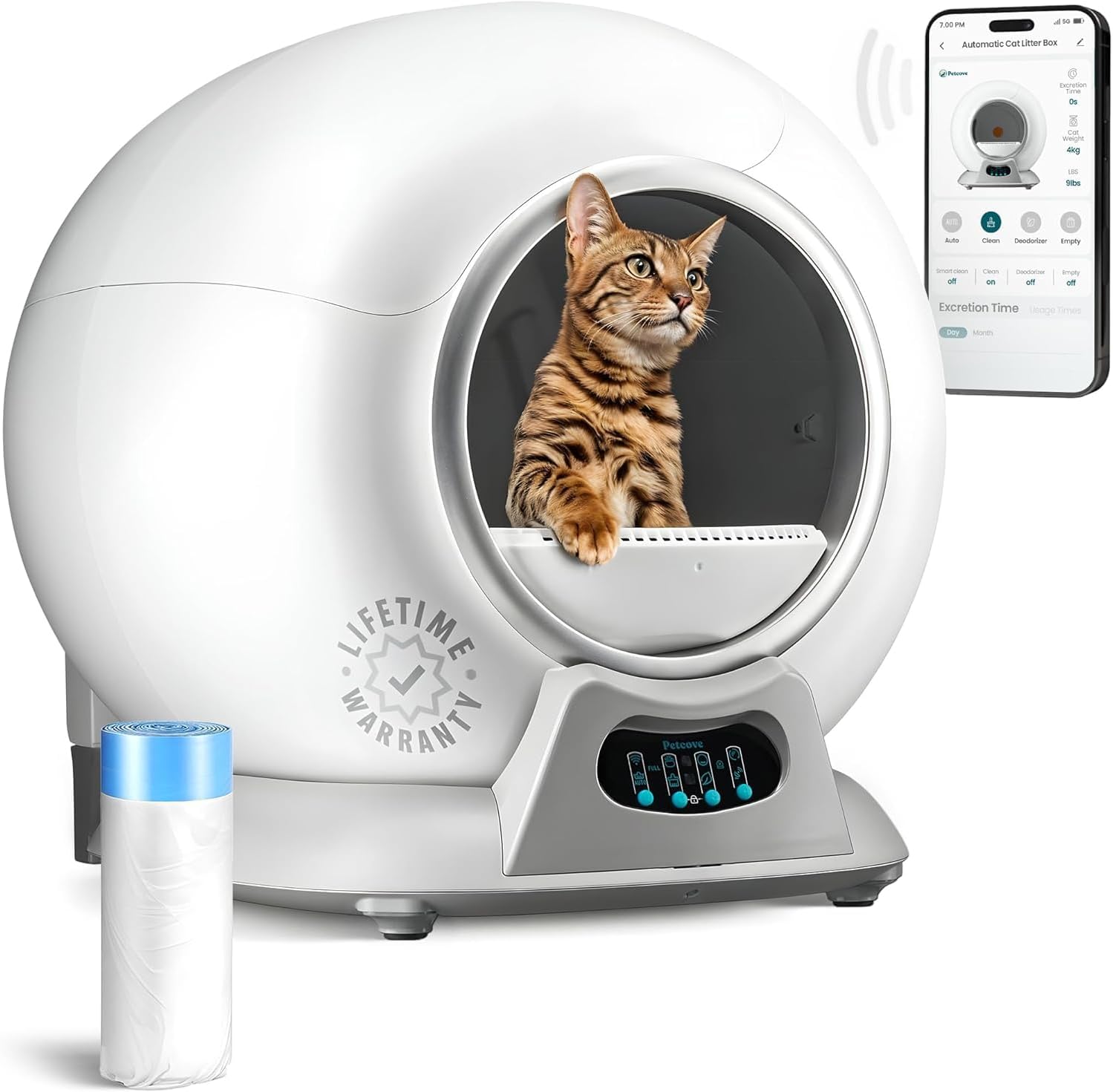
Litter-Robot 4 Automatic Self-Cleaning
Automatic waste separation with weight sensors, odor control system, and Wi-Fi connectivity. Tracks usage patterns and sends alerts when waste drawer is full. Compatible with multi-cat households. For small apartments, see our guide to compact automated solutions.
Check Amazon PriceAutomated Cleaning Technology
One of the most time-consuming aspects of pet care is cleaning, and automated cleaning technology has made significant strides:
| Cleaning Technology | How It Works | Best For | Time Saved Weekly |
|---|---|---|---|
| Self-Cleaning Litter Boxes | Automatically rakes waste into sealed compartment after use | Cat owners, busy households | 3-5 hours |
| Robotic Vacuums for Pet Hair | Specialized brushes and suction for pet hair, scheduled cleaning | All pet owners, especially shedding breeds | 2-4 hours |
| Automatic Pet Baths | Walk-through system with adjustable water temperature and drying | Dogs who dislike traditional baths | 1-2 hours |
| Smart Odor Eliminators | Detects and neutralizes odors using UV light and oxidation | Small spaces, litter box areas | 30 mins |
| Automated Grooming Tools | Brushing systems that adapt to coat type and shedding cycles | Long-haired breeds, seasonal shedders | 1-3 hours |
Important Safety Considerations
While automated cleaning devices offer convenience, safety should always come first:
- Supervision initially: Introduce pets gradually to self-cleaning devices
- Regular maintenance: Automated doesn't mean maintenance-free. Clean sensors and mechanisms regularly
- Power safety: Ensure electrical components are pet-safe and protected from chewing
- Backup systems: Have manual alternatives ready in case of power outages or device failure
- Veterinary consultation: Discuss any major changes to your pet's environment with your vet
Remember: Technology should enhance, not replace, your attention to your pet's needs and wellbeing.
Automated Entertainment & Exercise
Boredom and lack of stimulation are major causes of behavioral issues in pets. Automated entertainment systems address this through:
Interactive Laser Toys
Programmable laser patterns that move randomly to simulate prey. Some include obstacle avoidance and automatic shut-off after sessions to prevent overstimulation.
Touchscreen Games
Tablet-based games for dogs and cats that respond to paw touches with rewards. Adjust difficulty based on performance and track cognitive health over time.
Automated Exercise Wheels
For small pets like cats and ferrets, motorized wheels that encourage running with adjustable speed and duration tracking.
Smart Treat Dispensers
Dispense treats when pets solve puzzles or complete tasks. Can be controlled remotely via app for training reinforcement when away from home.

Safety & Security Automation
Keeping pets safe is every owner's priority, and automated safety technology provides multiple layers of protection:
Smart Pet Doors
Microchip or RFID-activated doors that only open for your pets, keeping other animals out. Some include cameras to monitor what enters and exits.
GPS Collars & Indoor Trackers
Real-time location tracking with geofencing alerts. Indoor systems use Bluetooth/Wi-Fi triangulation for precise apartment or house location.
Temperature & Air Quality Sensors
Monitor home environment and alert if temperatures become dangerous or air quality drops. Can trigger smart thermostats or air purifiers automatically.
Automated Alert Systems
Integrated systems that notify you, neighbors, or emergency contacts if unusual patterns are detected (prolonged inactivity, escape alerts, etc.).
Creating Your Smart Pet Care Ecosystem
The true power of automated pet care emerges when devices work together in an integrated ecosystem. Here's how to build yours:
4-Week Smart Pet Ecosystem Setup Plan
- Assess your pet's specific needs (age, health, behavior)
- Research compatible devices within your budget
- Start with one core device (feeder or camera)
- Ensure strong Wi-Fi coverage in pet areas
- Download necessary apps and create accounts
- Add health monitoring (activity tracker or smart collar)
- Set up automated feeding/watering schedule
- Configure alerts and notifications
- Test remote access and control
- Begin data collection baseline
- Add cleaning automation (litter box or robot vacuum)
- Set up entertainment systems
- Integrate devices through smart home platform
- Create automation routines (e.g., play after meals)
- Share access with family members
- Review collected data and adjust settings
- Add any specialty devices (grooming, safety)
- Set up data sharing with veterinarian
- Create backup plans for power/Internet outages
- Schedule regular maintenance calendar
Integration Tips
- Choose compatible ecosystems: Stick with devices that work with your existing smart home platform (Apple HomeKit, Google Home, Alexa)
- Prioritize interoperability: Look for devices with open APIs or IFTTT support for maximum flexibility
- Centralize control: Use a single app dashboard when possible to monitor all devices
- Consider power needs: Plan for battery backups and accessible outlets
- Start simple: Add complexity gradually as you and your pet adjust to the technology
Cost Analysis: Investment vs. Value
Many pet owners hesitate about automated systems due to cost concerns, but a thorough analysis reveals the long-term value:
Initial Investment
Basic ecosystem: $300-500 (feeder, camera,
basic tracker)
Mid-range system: $700-1,200 (adds health
monitor, cleaning)
Premium ecosystem: $1,500-3,000+ (full
integration, specialty devices)
Potential Annual Savings
Pet sitting: $500-2,000+
Emergency vet visits: $300-1,500+
Behavior training: $200-800
Damage repair: $100-500+
Total potential: $1,100-4,800+ annually
Non-Monetary Benefits
Earlier health issue detection
Reduced pet anxiety
Better weight management
Enhanced mental stimulation
Peace of mind for owners
ROI Timeline
Basic system: 6-12 months
Mid-range: 12-24 months
Premium: 24-36 months
Note: Health benefits and extended lifespan
provide additional long-term value
Smart Shopping Strategies
- Buy during sales: Pet tech often discounts during holiday seasons
- Consider refurbished: Manufacturer-refurbished devices offer savings with warranty
- Start with essentials: Prioritize feeder and camera, add other devices gradually
- Watch for bundles: Companies often offer ecosystem bundles at discounted rates
- Check subscription costs: Some devices require ongoing subscriptions for full functionality
2026 Automated Pet Care FAQs
Will automated devices make my pet lazy or less social?
Properly used automation should not make pets lazy or less social. In fact, many devices encourage activity through interactive play and puzzle-solving. The key is balance use automation for routine tasks (feeding, litter cleaning) but maintain regular interactive play, training, and affection. Automated devices are tools to enhance care, not replacements for human interaction.
How reliable are automated pet care devices during power outages?
Most quality devices include battery backup for short outages (24-72 hours). For extended outages, have manual backups ready. Smart feeders should have manual release options, and you should keep traditional bowls available. Consider a small UPS (uninterruptible power supply) for critical devices. According to the FEMA Pet Preparedness Guide, every pet household should have a 72-hour emergency plan that doesn't rely on technology.
Can automated systems work for multiple pets with different needs?
Yes, many modern systems are designed for multi-pet households. Smart feeders with RFID or facial recognition ensure each pet gets their specific diet. Cameras can distinguish between pets for individual activity tracking. Look for systems that support multiple pet profiles and allow customization for each animal's age, weight, health conditions, and preferences.
Are there privacy concerns with pet cameras and monitors?
As with any connected device, privacy should be considered. Choose reputable brands with strong encryption and regular security updates. Use strong, unique passwords and enable two-factor authentication. Position cameras to monitor only pet areas, not private spaces. Review privacy policies to understand how data is stored and used. Many systems offer local storage options instead of cloud storage for increased privacy.
How do I introduce my pet to automated devices?
Introduce devices gradually with positive reinforcement. For feeders, start with manual dispensing alongside the device. For self-cleaning litter boxes, keep the old box available initially. Use treats and praise when pets interact with new devices. Monitor initial reactions and be prepared to adjust placement or settings. Most pets adapt within 1-2 weeks, but some may need longer. Never force interaction if a pet shows significant fear or stress.
What maintenance do automated pet care devices require?
Regular maintenance varies by device but typically includes: cleaning sensors weekly, emptying waste compartments as needed, checking for software updates monthly, testing backup systems quarterly, and deep cleaning according to manufacturer instructions. Create a maintenance schedule and set reminders in your calendar. Proper maintenance extends device lifespan and ensures reliable operation.
Can automated pet care help with specific health conditions?
Yes, many devices are particularly helpful for pets with health conditions: diabetic pets benefit from precise feeding schedules, arthritic pets can use automated ramps and steps, pets with anxiety may be calmed by consistent routines maintained by automation, and pets requiring medication get accurate dosing from smart dispensers. Always consult your veterinarian before using technology as part of a treatment plan.
What should I look for when choosing automated pet care devices?
Key considerations include: compatibility with your existing tech ecosystem, reliability ratings and reviews, customer support quality, warranty length, ongoing costs (subscriptions, filters), ease of cleaning and maintenance, safety features (especially for chewers), and data privacy policies. Start with highly rated devices in each category and expand your ecosystem gradually based on what works best for your household.
Are there automated solutions for exotic pets or small animals?
Yes, the pet tech market has expanded to include solutions for various animals: automated temperature/humidity controls for reptiles, timed lighting systems for birds, automated hay feeders for rabbits and guinea pigs, and even smart aquariums with automated water testing and maintenance. Research specifically designed for your pet type, as needs vary significantly between species.
How has AI changed automated pet care in the last year?
2025-2026 saw significant AI advancements: predictive health analytics that detect issues before symptoms appear, behavior pattern recognition that identifies stress or pain, personalized recommendation engines that adjust care based on individual pet data, and natural language processing that allows more intuitive app interactions. AI has transformed devices from simple automators to intelligent care assistants that learn and adapt to each pet's unique needs.
Final Thoughts on Automated Pet Care
Automated pet care technology represents one of the most significant advancements in pet ownership of our time. These intelligent systems offer more than convenience they provide enhanced health monitoring, consistent care, and valuable insights that can extend and improve your pet's life.
As we move further into 2026, the line between technology and traditional pet care continues to blur. The most successful pet owners will be those who embrace these tools while maintaining the essential human connection that forms the foundation of the human-animal bond. Automation should augment, not replace, the love, attention, and companionship that pets need and deserve.
Start small, choose quality devices that address your specific needs, and build your ecosystem gradually. Remember that the goal is not to create a fully automated household, but to use technology to enhance the care you provide, reduce stress for both you and your pet, and create more quality time for the interactions that matter most.
Your pet relies on you for everything, including wise decisions about their care. By thoughtfully integrating automated pet care technology, you're investing in their health, happiness, and your peace of mind. That's the true value of smart pet care in 2026 and beyond.