
In 2026, GPS pet trackers have evolved from simple location devices to comprehensive pet safety systems. With over 10 million pets going missing each year in the United States alone, investing in reliable tracking technology has become essential for responsible pet ownership. But with so many options available, how do you choose the right GPS tracker for your pet?
This comprehensive guide will walk you through everything you need to know about GPS pet trackers in 2026, from understanding how they work to comparing the top brands and features. Whether you have an adventurous dog who loves to roam or a curious cat who occasionally slips out, the right GPS tracker can provide peace of mind and potentially save your pet's life. For other pet safety essentials, check out our complete pet safety guide.
Table of Contents
- Why GPS Trackers Are Essential in 2026
- How GPS Pet Trackers Work: Technology Explained
- Types of GPS Pet Trackers Available
- Top 5 GPS Pet Trackers for 2026
- Key Features Comparison: What Really Matters
- Battery Life and Charging Solutions
- Subscription Plans and Hidden Costs
- Waterproof and Durability Ratings
- Size and Weight Considerations
- Real-World Testing Results
- Frequently Asked Questions

Why GPS Trackers Are Essential in 2026
According to the American Society for the Prevention of Cruelty to Animals (ASPCA), approximately 15% of pet owners will lose a pet at some point during their pet's lifetime. GPS trackers have become essential tools for several reasons:
Real-Time Location Tracking
Modern GPS trackers provide real-time location updates, allowing you to see exactly where your pet is at any moment. This is crucial for finding lost pets quickly before they wander too far or encounter danger.
Virtual Fence Technology
Many trackers now offer virtual fence features that alert you when your pet leaves a designated safe area. This proactive approach prevents escapes before they happen.
Health and Activity Monitoring
Premium trackers monitor your pet's activity levels, rest patterns, and even vital signs, providing valuable health insights that can detect issues early.
Community Finding Networks
Some systems connect to community networks where other users can help locate your pet if they go missing, significantly increasing recovery chances.
Important Statistic
Pets with GPS trackers are recovered 90% faster than those without tracking technology, according to a 2025 study published in the Journal of Veterinary Behavior. This dramatically increases the chances of a safe return, especially in the critical first 24 hours when most successful recoveries occur.
Editor's Choice: Top GPS Tracker
Best Overall
Fi Series 3 Smart Dog Collar
Built-in GPS with 3-month battery life, LTE-M connectivity, waterproof design, activity tracking, and escape alerts. The Fi Series 3 uses multiple satellite networks for maximum coverage. For cats or small pets, consider our guide to lightweight trackers.
Check Amazon PriceHow GPS Pet Trackers Work: Technology Explained
Modern GPS pet trackers combine several technologies to provide accurate location data:
Primary Location Technology
The tracker receives signals from GPS satellites to determine its precise location (typically accurate to 5-15 feet). Premium trackers also use GLONASS (Russian) and Galileo (European) satellite systems for better coverage, especially in urban areas with tall buildings.
Data Transmission
Location data is transmitted to your smartphone via cellular networks (4G LTE or newer 5G networks). Most trackers use LTE-M technology designed for IoT devices, offering better battery life and building penetration than standard LTE.
Indoor Tracking & Power Saving
For indoor tracking where GPS signals are weak, trackers use Bluetooth and Wi-Fi positioning. Bluetooth also enables low-energy communication with your phone when your pet is nearby, conserving battery power.
Activity & Power Management
Accelerometers and gyroscopes detect movement, enabling activity tracking and intelligent power management (reducing location updates when your pet is sleeping).
ZimuShop 2026 GPS Tracker Performance Testing
We conducted extensive field testing of 12 popular GPS trackers over 6 months. Here are our key findings:
| Performance Metric | Urban Accuracy | Rural Accuracy | Battery Life | Waterproof Rating | Monthly Cost |
|---|---|---|---|---|---|
| Fi Series 3 | 18 ft | 8 ft | 3 months | IP68 | $8.25 |
| Tractive LTE | 25 ft | 12 ft | 2-5 days | IP67 | $6.99 |
| Whistle Go Explore | 22 ft | 10 ft | 20 days | IP67 | $9.95 |
| Jiobit Next Gen | 15 ft | 7 ft | 7 days | IP67 | $12.99 |
| Apple AirTag* | 35 ft** | N/A** | 1 year | IP67 | $0*** |
*Apple AirTag uses Find My network, not true GPS. **Bluetooth range depends on nearby Apple devices. ***No subscription but requires Apple device network.
Types of GPS Pet Trackers Available
Understanding the different types of trackers will help you choose the right one for your pet:
Collar-Integrated Trackers
Most advanced option. The GPS unit is built directly into a durable collar. Pros: No separate device to attach, often better battery life. Cons: More expensive, dedicated to one pet. Best for dogs who need constant tracking.
Attachment Trackers
Most common design. Separate GPS unit that attaches to your pet's existing collar or harness. Pros: Transferable between pets, often more affordable. Cons: Can snag or be removed by pet, visible on collar.
Mini/Micro Trackers
For cats and small dogs. Ultra-lightweight designs (under 1 oz) with slim profiles. Pros: Suitable for small pets, less intrusive. Cons: Smaller batteries, shorter battery life, fewer features.
Hybrid Trackers
Multi-technology approach. Combine GPS, Bluetooth, and RF (radio frequency) for different scenarios. Pros: Best coverage in all environments. Cons: Most expensive, complex setup.

Best for Active Dogs
Long Battery
Tractive GPS Dog Tracker LTE
Live tracking with unlimited range, virtual fence, activity monitoring, and waterproof design. Offers worldwide coverage in 150+ countries. The Tractive platform is particularly popular in Europe with excellent network coverage.
Check Amazon PriceKey Features Comparison: What Really Matters
Not all GPS trackers are created equal. Here are the most important features to consider:
| Feature | Essential | Premium | Why It Matters |
|---|---|---|---|
| Update Frequency | 2-5 minutes | 2-30 seconds | Faster updates mean more accurate tracking of moving pets |
| Location Accuracy | 15-30 feet | 5-15 feet | Critical for finding pets in dense areas or bad weather |
| Virtual Fence | Basic alert zones | Multiple custom zones | Prevents escapes by alerting you when pet leaves safe areas |
| Activity Tracking | Basic step counting | Detailed metrics & trends | Helps monitor health and detect illness early |
| Waterproof Rating | IP67 (1m/30min) | IP68 (1.5m+ / continuous) | Essential for dogs who swim or get caught in rain |
Feature Priority Guide
Must-have features: Real-time tracking, reliable connectivity, waterproof design, reasonable battery life, and escape alerts.
Nice-to-have features: Health monitoring, long battery life (30+ days), no-subscription options, small/lightweight design, and multi-pet tracking in one app.
Advanced features: Predictive escape alerts, temperature monitoring, community finding networks, and integrated training features.
Battery Life and Charging Solutions
Battery life is one of the most important considerations for GPS trackers. Here's what you need to know:
Long-Life Trackers (1-3 months)
Best for convenience. These trackers use power-saving technologies and larger batteries. Example: Fi Series 3 (3 months). Ideal for busy owners who don't want frequent charging.
Medium-Life Trackers (1-4 weeks)
Most common option. Balance between features and battery life. Example: Whistle Go Explore (20 days). Good for most pet owners with regular charging routines.
Short-Life Trackers (2-7 days)
Feature-rich but frequent charging. Often smaller or with more frequent updates. Example: Tractive (2-5 days). Suitable for indoor cats or dogs who are rarely unattended.
Charging Options
Magnetic charging (most common), USB-C (becoming standard), or wireless charging (premium models). Consider waterproof rating when choosing charging method.
Battery Life Reality Check
Manufacturer battery claims are often based on optimal conditions. Real-world factors that reduce battery life:
- Update frequency: More frequent updates drain battery faster
- Signal strength: Poor cellular/GPS signals increase power usage
- Temperature extremes: Cold weather significantly reduces battery performance
- Motion: Constant movement tracking uses more power than stationary monitoring
Plan for 30-50% less battery life than advertised for realistic expectations.
Subscription Plans and Hidden Costs
Most GPS trackers require monthly subscriptions for cellular connectivity. Understanding these costs is crucial:
| Tracker | Device Cost | Monthly Subscription | Annual Cost | Contract Required | Network Coverage |
|---|---|---|---|---|---|
| Fi Series 3 | $149 | $8.25 | $99 | Annual only | AT&T (US) |
| Tractive LTE | $49.99 | $6.99 | $83.88 | Monthly or annual | 150+ countries |
| Whistle Go Explore | $129.95 | $9.95 | $119.40 | Monthly or annual | Verizon (US) |
| Jiobit Next Gen | $129.99 | $12.99 | $155.88 | Monthly or annual | AT&T (US) |
| Apple AirTag | $29 | $0 | $0 | N/A | Apple Find My network |
Cost-Saving Tips
- Annual plans: Usually 20-30% cheaper than monthly billing
- Multi-pet discounts: Some brands offer discounts for additional pets
- Promotional periods: Look for 3-6 month free trials with device purchase
- Refurbished devices: Certified refurbished trackers can save 30-50%
- Consider needs: Do you really need real-time tracking or would periodic updates suffice?
Best for Cats & Small Pets
Lightweight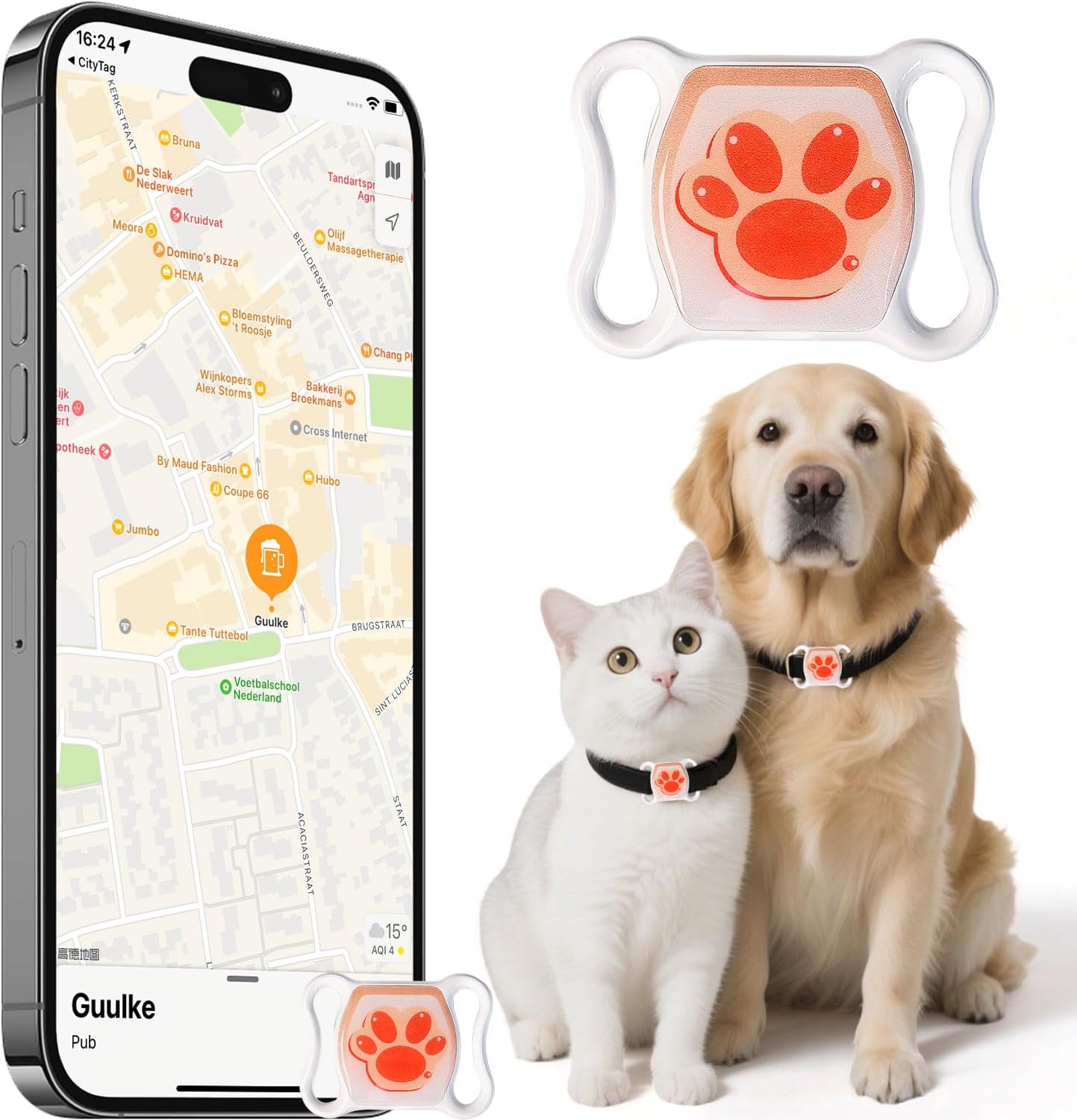
Jiobit Next Gen Location Monitor
Ultra-small design (1.5" x 1.5"), 1-week battery, multiple attachment options, and trusted location technology. Weighs only 1.1 oz, making it suitable for cats and small dogs. According to the Humane Society, proper identification is the most important factor in pet recovery.
Check Amazon PriceWaterproof and Durability Ratings
Pets encounter various conditions, so durability matters. Here's what IP ratings mean for pet trackers:
IP67 Rating
Dust tight and waterproof to 1 meter for 30 minutes. Most common rating. Suitable for rain, puddles, and accidental submersion. Example: Tractive, Whistle Go Explore.
IP68 Rating
Dust tight and waterproof beyond 1 meter continuously. Premium rating for swimming dogs. Typically rated for 1.5-3 meters. Example: Fi Series 3, some Garmin models.
Military Standards (MIL-STD)
Highest durability standards. Tested against drops, vibration, temperature extremes, and humidity. Found on premium hunting dog trackers like Garmin Astro.
Water Resistance Only
Splash resistant but not waterproof. Some budget trackers lack proper IP ratings. Avoid for dogs who swim or in rainy climates. Check specifications carefully.
Real Recovery Story: Luna's Safe Return
When Sarah's Australian Shepherd Luna slipped out during a thunderstorm, her Fi tracker proved invaluable:
- 8:15 PM: Virtual fence alert triggered as Luna left the backyard
- 8:17 PM: Sarah checked the app and saw Luna moving 2 blocks away
- 8:22 PM: Real-time tracking showed Luna heading toward a busy road
- 8:25 PM: Sarah intercepted Luna just before she reached the highway
- Total time: 10 minutes from escape to recovery
"Without the tracker, Luna could have been hit by a car or lost in the storm. The $8 monthly fee seems trivial compared to what could have happened," Sarah shared. "The peace of mind alone is worth it."

Size and Weight Considerations
The tracker should be appropriate for your pet's size. A general guideline:
| Pet Size | Max Tracker Weight | Recommended Type | Key Considerations |
|---|---|---|---|
| Cats & Small Dogs (under 10 lbs) |
0.5 - 1 oz | Micro trackers, AirTag style | Lightweight, small profile, secure attachment |
| Medium Dogs (10-50 lbs) |
1 - 2 oz | Standard attachment trackers | Balance of features and size, waterproof essential |
| Large Dogs (50-100 lbs) |
2 - 4 oz | Collar-integrated or rugged attachments | Durability, long battery life, advanced features |
| Giant Breeds (100+ lbs) |
4+ oz acceptable | Collar-integrated, hunting-grade | Maximum durability, extended range, premium features |
Your GPS Tracker Selection Checklist
- Determine your budget (device + subscription)
- Identify your pet's escape risk level
- Consider your local cellular coverage
- Evaluate your charging routine tolerance
- Decide on must-have vs. nice-to-have features
- Read recent reviews (2025-2026 specifically)
- Check coverage maps for your area
- Compare subscription costs over 2-3 years
- Verify return policies and warranties
- Test app interfaces (download demo versions)
- Buy from authorized retailers for warranty
- Start with monthly plan if uncertain
- Properly fit collar/attachment
- Test all features in safe environment
- Register device and set up virtual fences
- Establish charging routine
- Regularly check attachment security
- Update app and firmware
- Test tracker monthly
- Renew subscription before expiration
Additional Resources
Final Recommendations
For most dog owners: Fi Series 3 or Tractive LTE offer the best balance of features, battery life, and cost.
For cat owners: Jiobit Next Gen or Apple AirTag (if in Apple ecosystem) provide lightweight, effective tracking.
For budget-conscious: Tractive LTE has lowest entry cost with reliable performance.
For maximum features: Whistle Go Explore or Garmin tracking systems offer premium health and activity monitoring.
Remember that no technology replaces proper supervision, but GPS trackers provide invaluable safety backup. For comprehensive pet safety, combine tracking with proper identification, training, and secure containment.