Choosing the right food for your puppy is one of the most important decisions you'll make as a new pet parent. This comprehensive 2026 puppy food guide covers everything from nutritional requirements to feeding schedules, with expert recommendations for small, medium, and large breed puppies. Learn how to support your puppy's growth, development, and long-term health with proper nutrition.
Proper puppy nutrition sets the foundation for a lifetime of health. This guide will help you navigate the overwhelming world of puppy food brands, understand AAFCO puppy food standards, and create a feeding schedule that works for your growing companion.
Table of Contents

Puppy Nutritional Needs: Building Blocks for Growth
Puppies have unique nutritional requirements that differ significantly from adult dogs. During their first year, puppies experience rapid growth and development that demands specific nutrients in precise ratios.
AAFCO Puppy Food Standards
Look for foods labeled "complete and balanced for growth" or "all life stages" according to AAFCO standards. These foods meet the minimum nutritional requirements for puppies. Key requirements include:
- Minimum 22% protein (vs 18% for adult dogs)
- Minimum 8% fat (vs 5% for adult dogs)
- Calcium to phosphorus ratio of 1:1 to 1.8:1
- DHA for brain development (especially important for first 16 weeks)
- Higher calorie density for energy needs
Key Growth Periods in Puppy Development
Understanding your puppy's growth stages helps you provide appropriate nutrition at each phase:
0-8 Weeks: Nursing/Weaning
- Mother's milk or puppy formula
- Introduction to softened puppy food
- Frequent small meals (4-6 times daily)
- Critical immune system development
2-4 Months: Rapid Growth
- Highest nutritional demands
- 3-4 meals daily
- Brain and eye development peak
- Socialization and training begin
4-12 Months: Steady Growth
- Growth rate slows
- 2-3 meals daily
- Transition to adult food begins
- Bone and muscle development
Best Overall Puppy Food
All Life Stages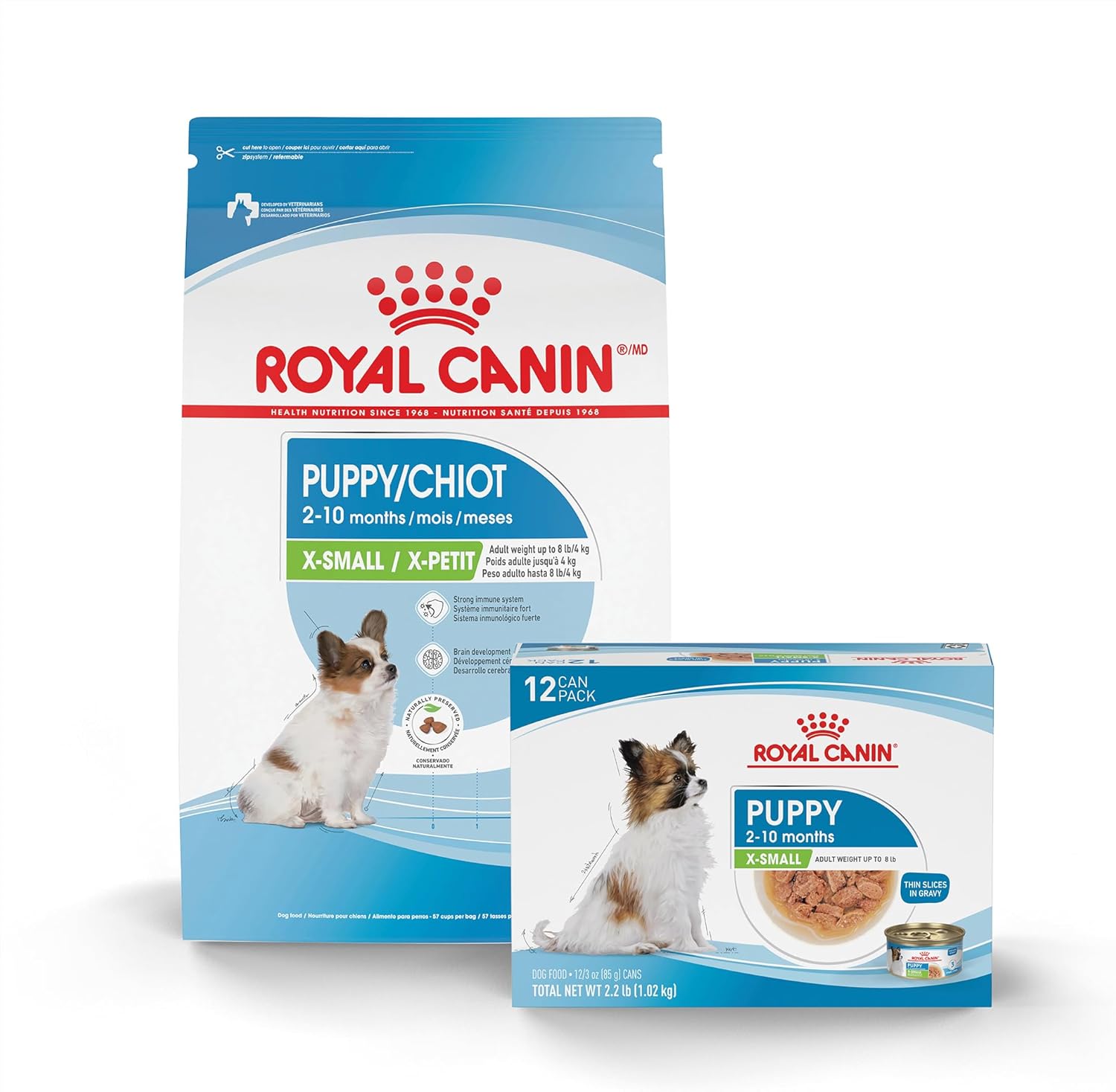
Royal Canin Puppy Dry Dog Food - Breed Specific Nutrition
Best for all breeds: Specially formulated kibble size and shape for puppies. Contains antioxidants, prebiotics, and essential nutrients for optimal growth and immune support.
Puppy-specific features: Highly digestible proteins, DHA for brain development, balanced mineral content for bone health.
Check Amazon PriceBreed Size Differences in Puppy Nutrition
Not all puppies have the same nutritional needs. Breed size significantly impacts growth rate, calorie requirements, and specific nutrient needs.
Small Breed Puppies
Under 20 lbs adult weight
- Fast metabolism
- Small kibble size needed
- Higher calorie density
- Mature by 9-12 months
Medium Breed Puppies
20-50 lbs adult weight
- Moderate growth rate
- Balanced nutrition
- Standard puppy formulas
- Mature by 12-15 months
Large Breed Puppies
50-100 lbs adult weight
- Controlled growth needed
- Lower calcium levels
- Joint support nutrients
- Mature by 18-24 months
Giant Breed Puppies
Over 100 lbs adult weight
- Very slow growth essential
- Special giant breed formulas
- Critical joint protection
- Mature by 24+ months
Large Breed Puppy Warning
Never feed regular puppy food to large or giant breed puppies. These breeds need specifically formulated large breed puppy food with:
- Lower calcium levels (0.8-1.2% vs 1.2-1.8% for small breeds)
- Controlled calorie density to prevent rapid growth
- Added glucosamine and chondroitin for joint health
- Optimal calcium-phosphorus ratio for bone development
Feeding inappropriate food can lead to developmental orthopedic diseases like hip dysplasia. Always consult avma.org resources.
Puppy Feeding Schedule & Portion Control
Establishing a consistent puppy feeding schedule is crucial for proper digestion, house training, and behavioral development.
4 Meals Daily
Schedule: 7 AM, 12 PM, 5 PM, 10 PM
Portion: Divide daily amount into 4 equal meals
Notes: Puppies at this age have small stomachs and need frequent feeding to maintain energy and blood sugar levels.
3 Meals Daily
Schedule: 7 AM, 1 PM, 7 PM
Portion: Divide daily amount into 3 equal meals
Notes: As stomach capacity increases, you can reduce feeding frequency while maintaining total daily calories.
2 Meals Daily
Schedule: 7 AM, 7 PM
Portion: Divide daily amount into 2 equal meals
Notes: Most puppies transition to 2 meals daily around 6 months. Large breeds may need 3 meals longer.
Adult Feeding Schedule
Schedule: 1-2 meals daily
Transition: Gradually switch to adult food over 7-10 days
Notes: Small breeds may transition earlier (9-12 months), giant breeds later (18-24 months).

Essential Nutrients for Puppy Development
Quality puppy food should contain specific nutrients in optimal ratios to support healthy growth:
High-Quality Protein
Sources: Chicken, lamb, fish, eggs
Function: Muscle development, tissue repair, enzyme production
Minimum: 22% for growth, 25-30% ideal
DHA (Omega-3)
Sources: Fish oil, algae, egg yolks
Function: Brain and eye development, cognitive function
Importance: Critical first 16 weeks
Calcium & Phosphorus
Ratio: 1:1 to 1.8:1 (calcium:phosphorus)
Function: Bone and teeth development
Warning: Excess causes growth problems
Antioxidants
Sources: Vitamin E, Vitamin C, selenium
Function: Immune system support, cell protection
Timing: Especially important during vaccination
Best for Large Breeds
Joint Support
Hill's Science Diet Large Breed Puppy Food - Vet Recommended
Specifically for large breeds: Controlled calcium levels (1.0%), optimal calorie content, and added glucosamine & chondroitin for joint health.
Large breed benefits: Prevents rapid growth, supports healthy bone development, reduces risk of orthopedic issues.
Check Amazon PriceIngredients to Avoid in Puppy Food
When selecting puppy food, watch for these problematic ingredients:
Artificial Preservatives
Examples: BHA, BHT, ethoxyquin
Concerns: Potential carcinogens, unnecessary additives
Alternatives: Mixed tocopherols (Vitamin E), rosemary extract
Excessive Fillers
Examples: Corn, wheat, soy as first ingredients
Concerns: Empty calories, potential allergies
Alternatives: Whole grains, sweet potatoes, peas
Artificial Colors/Flavors
Examples: Red 40, Yellow 5, artificial flavors
Concerns: Unnecessary additives, potential health risks
Alternatives: Natural flavors, no added colors
Generic Meat Meals
Examples: "Meat meal," "animal by-products"
Concerns: Unknown protein sources, lower quality
Alternatives: "Chicken meal," "lamb meal" (specific sources)
Transitioning to Puppy Food: Step-by-Step Guide
Whether transitioning from mother's milk, formula, or another food, follow this gradual process to prevent digestive upset:
7-Day Transition Method
Always transition new foods gradually over 7-10 days to allow your puppy's digestive system to adjust:
| Days | Old Food | New Food | Monitoring |
|---|---|---|---|
| 1-2 | 75% | 25% | Appetite, energy |
| 3-4 | 50% | 50% | Stool consistency |
| 5-6 | 25% | 75% | Digestion, coat |
| 7+ | 0% | 100% | Overall health |
Special Considerations for Weaning Puppies
If transitioning from mother's milk or formula (typically 3-8 weeks):
Soften the Food
Mix puppy kibble with warm water or puppy formula to create a mushy consistency. Gradually reduce liquid over 2-3 weeks.
Temperature Matters
Serve food at room temperature or slightly warm (not hot). Cold food can cause digestive upset in young puppies.
Frequent Small Meals
Young puppies need 4-6 small meals daily. Their stomachs are tiny and can't handle large volumes at once.
Monitor Weight Gain
Weigh puppies daily during transition. They should gain 5-10% of body weight weekly. Consult vet if not gaining.

Top Puppy Food Picks for 2026
Based on veterinary recommendations, nutritional analysis, and consumer reviews, here are our top puppy food recommendations for 2026:
Royal Canin Puppy Food
Breed-specific nutrition with optimal kibble size. Contains antioxidants, prebiotics, and essential nutrients for puppies up to 12 months.
Key Benefits:
- Breed-specific formulas
- Highly digestible proteins
- DHA for brain development
Hill's Science Diet Puppy
Vet-recommended with controlled calcium levels for large breeds. Includes DHA from fish oil and balanced minerals.
Key Benefits:
- Controlled growth for large breeds
- Clinically proven antioxidants
- No artificial colors/flavors

Purina Pro Plan Puppy
Small breed formula with high protein, small kibble size, and live probiotics. Fortified with guaranteed live probiotics.
Key Benefits:
- Small kibble for tiny mouths
- High protein (29%)
- Live probiotics for digestion
2026 Puppy Food Comparison Summary
| Puppy Food Brand | Protein % | Fat % | Calories/Cup | Best For |
|---|---|---|---|---|
| Royal Canin Puppy | 28% | 18% | 348 | All breeds |
| Hill's Science Diet Large Breed | 26% | 14% | 335 | Large/giant breeds |
| Purina Pro Plan Small Breed | 29% | 18% | 442 | Small/toy breeds |
| Blue Buffalo Wilderness Puppy | 36% | 16% | 409 | Active puppies |
| Wellness Complete Health Puppy | 28% | 17% | 415 | Natural formula seekers |
Based on 2026 nutritional analysis and AAFCO standards. Always follow feeding guidelines on package and adjust based on puppy's growth rate and body condition.
Puppy Feeding Chart by Weight & Age
Use this feeding chart as a starting point, adjusting based on your puppy's individual needs, activity level, and growth rate:
How to Adjust Portions
These amounts are starting points. Adjust based on:
- Body Condition Score: You should be able to feel but not see ribs
- Growth Rate: Regular weight checks (weekly for young puppies)
- Activity Level: Active puppies need 10-20% more calories
- Food Type: Different brands have different calorie densities
- Individual Metabolism: Some puppies burn calories faster
Always consult your veterinarian for personalized feeding recommendations, especially for large or giant breed puppies.
Final Puppy Nutrition Tips
Remember that every puppy is unique. What works perfectly for one may not suit another. Key takeaways:
- Choose breed-appropriate food: Small, medium, and large breeds have different needs
- Follow AAFCO standards: Look for "complete and balanced for growth"
- Establish consistent schedule: Regular feeding times aid digestion and house training
- Monitor body condition: Adjust portions to maintain ideal weight
- Transition gradually: Always introduce new foods over 7-10 days
- Consult your veterinarian: Regular checkups ensure proper growth and development
Proper nutrition during puppyhood sets the foundation for a long, healthy life. Invest in quality food, establish good feeding habits, and enjoy watching your puppy grow into a healthy adult dog. Explore our puppy product recommendations.