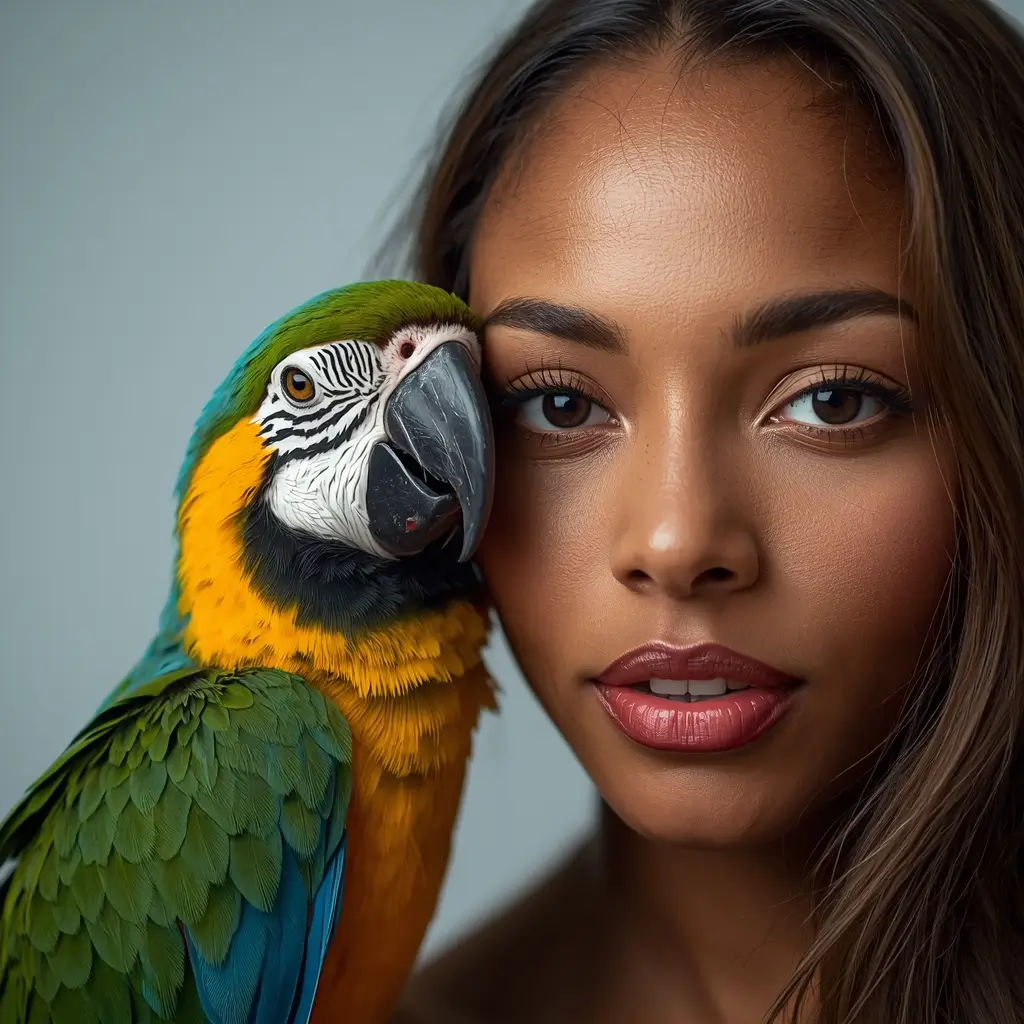
Birds communicate volumes through their body language, but most owners miss these subtle signals. Unlike dogs or cats, birds have evolved complex non-verbal communication systems that involve feather positioning, eye expressions, posture changes, and specific movements. Understanding bird body language is the key to building trust, preventing behavioral issues, and ensuring your feathered friend's emotional wellbeing.
In this comprehensive 2026 guide, we will explore the complete spectrum of avian communication signals. You will learn to distinguish between contentment and stress, recognize mating behaviors, identify illness early, and deepen your bond with your bird through better understanding. Whether you own a parrot, cockatiel, budgie, or any other pet bird, this guide will transform how you interact with your avian companion.
Table of Contents
- Why Understanding Bird Body Language Matters
- The Language of Feathers: Positions and Meanings
- Eye Expressions and Pupil Dilation
- Body Posture and Position Meanings
- Vocalizations: Beyond Just Chirping
- Species-Specific Body Language Differences
- Common Bird Body Language Misunderstandings
- Stress and Illness: Early Warning Signs
- Bonding and Affection Behaviors
- Training Tips Using Body Language Understanding
- Frequently Asked Questions

Why Understanding Bird Body Language Matters
Birds are prey animals in the wild, which means they have evolved to hide signs of weakness or illness. By the time a bird shows obvious symptoms of distress or disease, it may be seriously unwell. Learning to read subtle body language signals allows you to detect problems early, when intervention is most effective.
Beyond health monitoring, understanding your bird's body language:
- Strengthens your bond: When you respond appropriately to your bird's signals, trust deepens
- Prevents behavioral problems: Recognizing stress signals early can prevent feather plucking, aggression, and screaming
- Improves training effectiveness: Knowing when your bird is receptive to learning versus when they need space
- Enhances their quality of life: Meeting their emotional and social needs through better understanding
- Reduces misunderstandings: Avoiding accidental reinforcement of unwanted behaviors
Pro Tip: Observe Daily
Spend 10-15 minutes daily just observing your bird without interacting. Note their normal postures, vocalizations, and movements. This baseline understanding makes it easier to spot deviations that might indicate stress, illness, or mood changes. Keep a simple journal or use your phone to record observations for the first month.
Recommended Bird Behavior Guide
Bestseller
The Complete Guide to Parrot Behavior
Comprehensive guide covering all aspects of parrot communication, behavior modification, and bonding techniques. Includes species-specific information for African Greys, Amazons, Cockatoos, and more. For additional training resources, check our bird training basics guide.
Check Amazon PriceThe Language of Feathers: Positions and Meanings
Feathers are a bird's primary communication tool. Their position can indicate everything from comfort level to imminent aggression. Here is a detailed breakdown:
Relaxed Feathers
Appearance: Feathers lie smoothly against the body, slightly fluffed but not puffed out. Wings are held comfortably at sides.
Meaning: Content, comfortable, relaxed. Your bird feels safe and at ease in their environment.
Slightly Fluffed Feathers
Appearance: Light fluffing, especially around the head and neck. May be accompanied by one foot tucked up.
Meaning: Resting, comfortable sleepiness, or mild contentment. Could also indicate slightly cool temperature.
Fully Puffed Feathers
Appearance: Bird appears significantly larger, all feathers standing out from body.
Meaning: Can indicate illness (especially if combined with lethargy), extreme cold, OR in some contexts, aggression or fear. Context is crucial.
Tight Feathers Against Body
Appearance: Feathers pressed tightly to body, bird appears slim and streamlined.
Meaning: Alertness, fear, aggression, or preparation for flight. Often seen with upright posture and wide eyes.
Special Feather Positions
| Feather Position | What It Looks Like | Possible Meanings | Appropriate Response |
|---|---|---|---|
| Crest/Raised Head Feathers | Head feathers standing straight up | Excitement, curiosity, alarm, or aggression | Assess context before approaching |
| Tail Fanning | Tail feathers spread wide like a fan | Aggression, mating display, or balance adjustment | Give space, avoid interaction |
| Wing Drooping | Wings held slightly away from body, tips pointed down | Overheating, relaxation, or in young birds: begging for food | Check temperature, offer water |
| Quivering Wings | Wings vibrating rapidly while still folded | Excitement to see you, begging behavior (in babies), or frustration | Positive reinforcement if appropriate |
Critical: Fluffed Feathers + Lethargy
If your bird remains puffed up for extended periods (more than an hour while awake) AND shows decreased activity, reduced appetite, or sits on the cage floor, this is a medical emergency. Birds hide illness until they cannot anymore. Contact your avian veterinarian immediately.

Eye Expressions and Pupil Dilation
Bird eyes are remarkably expressive and can convey emotions ranging from curiosity to aggression. The pinning or flashing (rapid dilation and contraction of pupils) is particularly important to understand.
What It Is
Rapid dilation and contraction of the pupils, making the eyes appear to "flash" or "pin." This is controlled by voluntary muscles, unlike human pupil response.
Common Meanings
- Excitement: Seeing favorite person, toy, or food
- Concentration: While solving puzzles or learning
- Aggression: Often combined with raised feathers and lunging
- Fear: In new or threatening situations
- Mating behavior: During courtship displays
Key: Context determines the meaning. A bird eye-pinning while stepping up to your hand likely means excitement. The same eye pinning with raised feathers and beak open means "back off!"
Direct Staring
In the avian world, direct eye contact can be perceived as threatening. Slow blinking or looking away shows trust.
Trust Building Exercise
Practice "soft eyes" with your bird: Look at them with slightly unfocused eyes or through half-closed lids. Occasionally blink slowly. Many birds will eventually reciprocate with slow blinking, indicating they feel safe with you.
Body Posture and Position Meanings
How a bird holds its entire body communicates their emotional state and intentions. Here are key postures to recognize:
Common Bird Postures Decoded
| Posture | Appearance | Emotional State | What to Do |
|---|---|---|---|
| Upright Alert | Body tall and straight, feathers smooth, eyes wide | Curious, interested, or slightly alarmed | Approach slowly, speak softly |
| Crouched Low | Body close to perch, head lowered, feathers may be tight | Fearful, submissive, or preparing to fly away | Back away, remove perceived threat |
| Leaning Forward | Body tilted forward, often with wings slightly away from body | Wanting to go somewhere, asking to be picked up | Offer hand or encourage to step up |
| Head Lowered | Head bent down, often exposing back of neck | Requesting head scratches, showing trust | Gently scratch if bird is comfortable |
| Wing Stretching | One or both wings extended fully, often with leg stretch | Normal stretching, contentment, or balancing | Normal behavior, no action needed |
| Beak Grinding | Side-to-side grinding motion with beak | Contentment, relaxation, often before sleep | Positive sign, indicates comfort |
Note: Always consider multiple signals together for accurate interpretation.
Recommended Enrichment Toy
Foraging Toy
Creative Foraging Systems Puzzle Toy
Encourages natural foraging behavior and mental stimulation. Adjustable difficulty levels suitable for small to medium birds. Observing how your bird interacts with this toy can provide insights into their problem-solving style and confidence level. The AVMA recommends daily mental stimulation for pet birds.
Check Amazon PriceVocalizations: Beyond Just Chirping
Bird vocalizations range from simple contact calls to complex speech imitation. Understanding what different sounds mean enhances communication significantly.
Contact Calls
Sound: Short, repetitive chirps or calls
Meaning: "Where are you?" or "I'm here!" Used to locate flock members.
Response: Answer back with a similar sound or verbally respond so they know you're nearby.
Singing/Whistling
Sound: Melodic, often complex sequences
Meaning: Contentment, practicing, or territorial display in some species.
Response: Enjoy it! This is generally a happy behavior. You can whistle back to encourage.
Alarm Calls
Sound: Sharp, loud, repetitive shrieks
Meaning: Fear, warning of perceived danger
Response: Check environment for threats (real or perceived), speak calmly, cover cage partially if needed.
Stress Screaming
Sound: Prolonged, intense screaming
Meaning: Extreme distress, fear, or frustration
Response: Never punish. Identify and remove stressor. Provide quiet, dark space to calm down.
Understanding "Talking" Birds
Parrots and some other species can mimic human speech, but they rarely understand meaning in the way humans do. However, they often associate specific words or phrases with contexts:
- Greeting words: Often said when people arrive home or enter room
- Food-related words: Said around mealtimes or when seeing favorite foods
- Emotional expressions: May use "I love you" during preening or cuddling
- Attention-seeking phrases: Words that have historically gotten them attention
Recording Your Bird's Vocabulary
Keep a log of words/phrases your bird says and the context. This helps you understand what they might be trying to communicate. For example, if they say "Step up" while leaning toward you, they're likely requesting interaction, not just mimicking.

Species-Specific Body Language Differences
While many body language signals are universal among birds, significant species differences exist. Here is what you need to know about common pet bird species:
| Species | Unique Signals | Common Misunderstandings | Bonding Behaviors |
|---|---|---|---|
| African Grey Parrots | Subtle feather ruffling when content, "blushing" (cheek feathers turn pinkish) when excited | Their intense staring is often curiosity, not aggression | Preening their human, soft vocalizations, leaning into scratches |
| Cockatiels | Crest position indicates mood: straight up = alert/excited, flat back = angry/fearful, slightly back = relaxed | Hissing doesn't always mean aggression can be fear or warning | Whistling specific tunes with you, head bobbing, cheek rubbing |
| Budgerigars (Budgies) | Rapid head bobbing in young birds = begging; in adults = excitement | Chattering is normal social behavior, not necessarily directed at you | Regurgitating food (mating behavior often redirected to favorite human) |
| Cockatoos | Crest raising with wings slightly extended = dramatic display of emotion (can be positive or negative) | Their "cuddly" behavior can become hormonal/possessive if encouraged excessively | Dancing, hanging upside down to show trust, "blushing" (eye area changes color) |
| Lovebirds | Tucking paper or materials in feathers is natural nesting behavior, not "playing" | Their loud contact calls are normal, not necessarily distress | Sitting pressed against cage bars near you, preening each other (or your hair/clothes) |
Common Bird Body Language Misunderstandings
Many well-intentioned owners misinterpret their bird's signals. Here are the most frequent misunderstandings:
Misunderstanding 1: "My bird is cuddling with me"
Reality: A bird that burrows into your clothing or seeks dark, enclosed spaces with you may be exhibiting nesting behavior, not affection. This can lead to hormonal issues, egg binding in females, and aggression.
Correct response: Gently redirect to a perch, limit petting to head only, and ensure 10-12 hours of uninterrupted sleep in complete darkness.
Misunderstanding 2: "My bird is playing when he attacks my jewelry"
Reality: Many birds become territorial over shiny objects they perceive as "theirs." This "playing" is often possession aggression.
Correct response: Remove tempting items before handling your bird. If aggression occurs, calmly place bird back on perch without drama.
Misunderstanding 3: "My bird is singing happily all day"
Reality: Constant vocalization, especially at certain times of day, can be contact calling due to loneliness or boredom.
Correct response: Ensure adequate social interaction, foraging opportunities, and environmental enrichment. Consider adopting a compatible companion if appropriate.
Stress and Illness: Early Warning Signs
Recognizing early signs of stress or illness can save your bird's life. Birds deteriorate rapidly when sick, so early intervention is critical.
Physical Stress Indicators
- Constant feather fluffing (when not sleeping)
- Sitting on cage floor (unless species-specific normal behavior)
- Tail bobbing with each breath
- Wheezing or clicking sounds while breathing
- Discharge from eyes or nostrils
- Changes in droppings (color, consistency, frequency)
Behavioral Stress Indicators
- Feather destruction or excessive preening
- Aggression or fearfulness that's new or increased
- Decreased vocalization or unusual silence
- Reduced appetite or changes in eating habits
- Repetitive behaviors (pacing, head bobbing, screaming)
- Sleeping during normal active hours
When to Call the Avian Vet
Contact your avian veterinarian immediately if you observe: Labored breathing, inability to perch, seizures, bleeding, trauma, sudden inability to fly, or complete loss of appetite for more than 24 hours. For less urgent concerns, monitor for 24-48 hours but call for advice if behaviors persist. Always have an avian vet's contact information readily available.
Essential Bird Care Item
Safety Essential
Complete Avian First Aid Kit
Specially formulated for birds with styptic powder, wound care supplies, emergency feeding syringes, and avian-specific instructions. Having this on hand can make a critical difference in an emergency. Remember, first aid is not a substitute for veterinary care but can stabilize your bird during transport. Research from the Association of Avian Veterinarians shows prepared owners have better outcomes in emergencies.
Check Amazon PriceBonding and Affection Behaviors
When your bird trusts and bonds with you, they will display specific behaviors. Recognizing these helps reinforce your positive relationship.
Early Bonding Indicators
- Preening in your presence: Birds don't groom when they feel threatened
- Soft vocalizations: Quiet chirps, murmurs, or talking when you're near
- Approaching cage front: Moving toward you when you enter room
- Accepting treats gently: Taking food without fear or aggression
- Sleeping near you: Closing eyes/napping while you're present
Strong Bond Indicators
- Requesting head scratches: Lowering head or pushing against your hand
- Regurgitating food: Offering you "pre-digested" food (mating behavior redirected)
- Mutual preening attempts: Trying to preen your hair, eyebrows, or eyelashes
- Excitement displays: Wing flapping, vocalizing, dancing when you arrive
- Following you: Moving along perch or cage to stay near you
Advanced Trust Indicators
- Sleeping on you: Falling asleep while being held or perched on you
- Displaying vulnerable positions: Lying on back, exposing belly (in species that do this)
- Seeking comfort from you: During thunderstorms, fireworks, or other stressors
- Imitating your behaviors: Yawning when you yawn, coughing when you cough
- Showing concern for you: Alarm calls when you're distressed, checking on you if you're quiet
Building Trust Takes Time
Birds bond at their own pace, which can range from weeks to years depending on species, age, and previous experiences. Never force interaction. Let the bird set the pace. Spending quiet time near their cage, reading or working without demanding interaction, can build trust more effectively than forced handling.
Training Tips Using Body Language Understanding
Understanding body language makes training more effective and ethical. Here is how to apply this knowledge:
7-Day Body Language Observation & Training Plan
- Observe without interacting 15 min, 3x daily
- Note normal resting postures
- Record typical vocalizations
- Identify favorite perches/areas
- Establish "normal" baseline
- Practice identifying relaxed vs. alert postures
- Note response to your approach
- Identify "happy" vs. "stressed" vocalizations
- Watch for preening and sleeping patterns
- Learn their "back off" signals
- Approach only when bird shows relaxed signals
- End interactions before stress signals appear
- Use treats to reinforce calm behaviors
- Practice step-up only when bird leans forward
- Respect all "no" signals immediately
Training Do's and Don'ts
| Do | Don't |
|---|---|
| Train when bird is alert and interested (bright eyes, upright posture) | Force training when bird is sleepy, fluffed, or stressed |
| Keep sessions short (3-5 minutes) to prevent frustration | Continue training after bird shows stress signals |
| Use positive reinforcement (treats, praise, head scratches if they like them) | Use punishment or negative reinforcement (birds don't understand it) |
| End on a positive note with a success, even if small | End with failure or frustration |
| Respect their "no" signals (moving away, leaning back, beak open) | Force interaction when bird is clearly refusing |
Success Story: Kiwi's Transformation
Kiwi, a 5-year-old green-cheeked conure, was labeled "aggressive" by his previous family. He would bite unpredictably and scream constantly. After observing his body language for a week, I noticed:
- He fluffed his feathers and narrowed his eyes 2-3 seconds before biting
- His "aggression" often occurred when hands approached from above (predator perspective)
- He screamed most during late afternoon (flock calling time)
By respecting his warning signals, approaching from below instead of above, and answering his late afternoon contact calls, Kiwi transformed within a month. He now steps up willingly, rarely bites, and has become a vocal but not excessive member of the household. This demonstrates how body language understanding can resolve seemingly intractable behavior problems.
Additional Resources
Final Thoughts on Bird Body Language
Learning bird body language is a journey, not a destination. Even experienced bird owners continue to learn new subtleties about their feathered companions. The most important principle is respect: respect their signals, their space, and their right to say "no."
Your effort to understand your bird's non-verbal language will be rewarded with a deeper bond, fewer behavioral issues, and the joy of truly communicating with another species. That connection is what makes bird ownership so uniquely rewarding.