
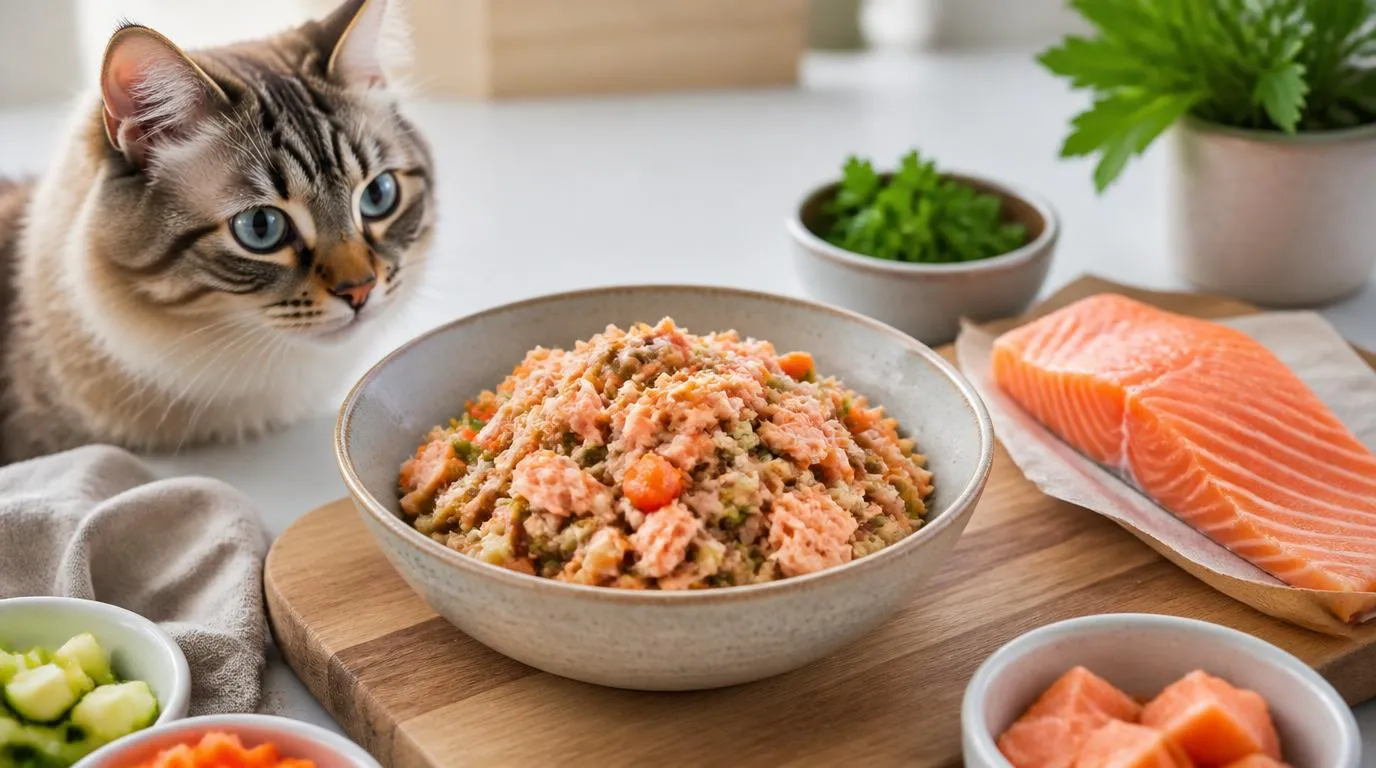
Complete Guide to Homemade Cat Food Image via AI Generated

Complete Guide to Homemade Cat Food for All Life Stages

Learn how to create balanced, nutritious homemade meals for your feline friend with vet-approved recipes for kittens, adults, and senior cats. This comprehensive guide covers taurine requirements, proper meat ratios, and essential supplements.

Read Complete Guide

All Homemade Cat Food Recipes

Homemade Cat Food FAQs

Why is taurine so important in homemade cat food?

Taurine is an essential amino acid for cats that they cannot produce in sufficient quantities on their own. Unlike dogs, cats require taurine in their diet to prevent serious health issues including heart disease (dilated cardiomyopathy), vision problems, and reproductive issues. All homemade cat food recipes must include adequate taurine sources like heart, liver, or taurine supplements.

What is the proper meat-to-organ ratio for homemade cat food?

A balanced homemade cat food should follow the 80/10/10 rule: 80% muscle meat, 10% organ meat (with at least half being liver), and 10% bone. Some variations use 84/6/10 or similar ratios. The exact ratio depends on the specific meats used and your cat's individual needs. Always consult with a feline nutrition specialist to create the right balance for your cat.

Can cats be vegetarian on homemade diets?

Cats are obligate carnivores and cannot thrive on vegetarian or vegan diets. They require nutrients found only in animal tissues, including taurine, arachidonic acid, vitamin A, and vitamin B12. Attempting to feed cats a vegetarian diet can lead to severe nutritional deficiencies, blindness, heart disease, and death. Always include animal-based proteins in homemade cat food.

How much homemade food should I feed my cat?

Adult cats typically need 20-30 calories per pound of body weight daily, depending on activity level. Indoor cats usually need about 20 calories per pound, while active outdoor cats may need up to 35 calories per pound. Kittens need significantly more: 50-65 calories per pound. Senior cats may need fewer calories. Always monitor your cat's weight and adjust portions accordingly.

How do I store homemade cat food safely?

Homemade cat food should be refrigerated in airtight containers and used within 3 days. For longer storage, freeze individual portions for up to 3 months. Thaw in the refrigerator overnight before serving. Always practice strict food safety: wash hands, utensils, and surfaces thoroughly. Never leave homemade cat food at room temperature for more than 2 hours, and discard any uneaten food after 30 minutes.

What supplements are essential for homemade cat food?

Essential supplements for homemade cat food include: taurine (250-500mg daily), vitamin E (2-4 IU per pound of food), fish oil for omega-3s (50-100mg EPA+DHA per pound of body weight), and vitamin B complex. Some recipes also require calcium (if not using bone), vitamin D, and iodine. Never use human supplements use only supplements specifically formulated for cats at appropriate feline dosages.

Can I feed my cat raw meat in homemade diets?

Raw feeding for cats is more common than for dogs, as cats are obligate carnivores. However, raw meat carries risks of bacterial contamination (Salmonella, E. coli, Campylobacter) and parasites. If feeding raw, use human-grade meat, freeze for at least 3 weeks to kill parasites, and practice excellent hygiene. Some veterinarians recommend lightly cooking meat (searing surfaces) to reduce bacterial load while preserving nutrients.

How do I transition my cat to homemade food?

Transition cats gradually over 10-14 days: Start with 90% old food/10% new food for 2-3 days, then 75/25 for 2-3 days, 50/50 for 2-3 days, 25/75 for 2-3 days, then 100% new food. Cats can be notoriously picky, so patience is key. Warming the food to room temperature or slightly above can increase palatability. Never starve a cat to force acceptance of new food.

Are there human foods that are toxic to cats?

Yes, many human foods are toxic to cats including: onions, garlic, chives, chocolate, caffeine, alcohol, grapes, raisins, xylitol (artificial sweetener), raw dough, macadamia nuts, and excessive salt. Some plants like lilies are also extremely toxic. Always research before adding any human food to your cat's diet and stick to cat-safe ingredients in approved quantities.