
How to Make Homemade Bird Food for Backyard Birds
Create nutritious chop mixes, sprouted seeds, and cooked meals for your feathered friends
Read Full RecipeDiscover 50+ vet-approved homemade bird food recipes for pet birds, wild birds, and aviary. Create balanced, nutritious meals with our comprehensive guides.
Explore All Recipes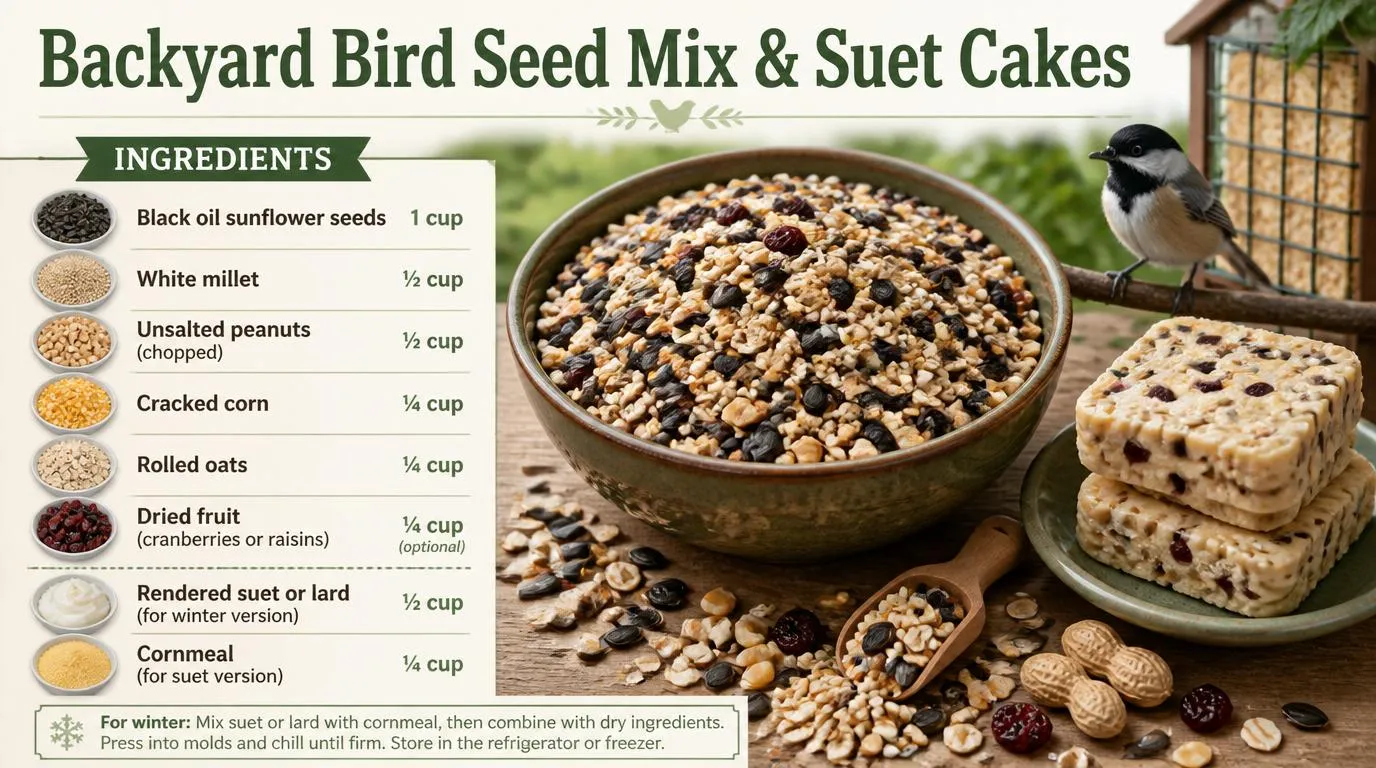 Image via AI Generated
Create nutritious chop mixes, sprouted seeds, and cooked meals for your feathered friends
Read Full RecipeHomemade bird food can be beneficial when properly balanced, as it allows you to control the quality of ingredients and eliminate preservatives. However, commercial bird foods are often formulated by avian nutritionists to meet specific species requirements. Homemade diets require careful planning to ensure all nutritional needs are met, especially for pet birds with specific dietary requirements.
Birds require specific vitamins and minerals including calcium, vitamin A, vitamin D3, and iodine. Pelletized diets usually contain these supplements, so if you're making homemade food, you may need to add a vitamin supplement specifically formulated for birds. Calcium is particularly important for egg-laying birds and can be provided through cuttlebone, mineral blocks, or calcium supplements.
The amount varies based on your bird's size, species, age, and activity level. As a general guideline, most birds should be offered fresh food daily in amounts they can consume within a few hours. Uneaten fresh food should be removed after 2-4 hours to prevent spoilage. Consult an avian veterinarian for specific recommendations based on your bird's individual needs.
Safe fruits include apples (without seeds), bananas, berries, melons, and oranges. Safe vegetables include carrots, broccoli, spinach, kale, sweet potatoes, and bell peppers. Always wash produce thoroughly and avoid avocados, chocolate, caffeine, alcohol, onions, and garlic, which are toxic to birds. Introduce new foods gradually to avoid digestive upset.
Homemade bird food containing fresh ingredients should be refrigerated in airtight containers and used within 2-3 days. Dry mixes can be stored in airtight containers in a cool, dark place for up to 2 months. Frozen portions can last 3-6 months. Always practice good food safety: wash hands and preparation surfaces thoroughly, and never leave homemade bird food at room temperature for extended periods.
Transition gradually over 2-4 weeks: Start by mixing 25% new homemade food with 75% old food for the first week, then 50/50 for the second week, then 75% new/25% old, finally 100% homemade food. Monitor your bird's weight, droppings, and behavior throughout the transition. Some birds may be resistant to change, so patience and persistence are key.
No, an all-seed diet is nutritionally incomplete and can lead to health problems like obesity, fatty liver disease, and vitamin deficiencies. Seeds should only be part of a balanced diet that includes pellets, fresh fruits, vegetables, and other nutrient-rich foods. For most pet birds, seeds should make up no more than 10-20% of their total diet.
Offer a variety of foods daily to ensure nutritional balance and prevent boredom. Rotate different fruits, vegetables, and grains throughout the week. Aim for at least 3-5 different types of fresh foods daily. This variety helps prevent selective eating where birds only pick their favorite items and miss out on important nutrients.
Yes, sprouted seeds are more nutritious than dry seeds. The sprouting process increases vitamin content, makes minerals more bioavailable, and reduces anti-nutrients. Sprouted seeds are also more digestible. However, they must be prepared and stored properly to avoid bacterial growth. Rinse sprouts thoroughly and serve immediately or refrigerate for no more than 2 days.