
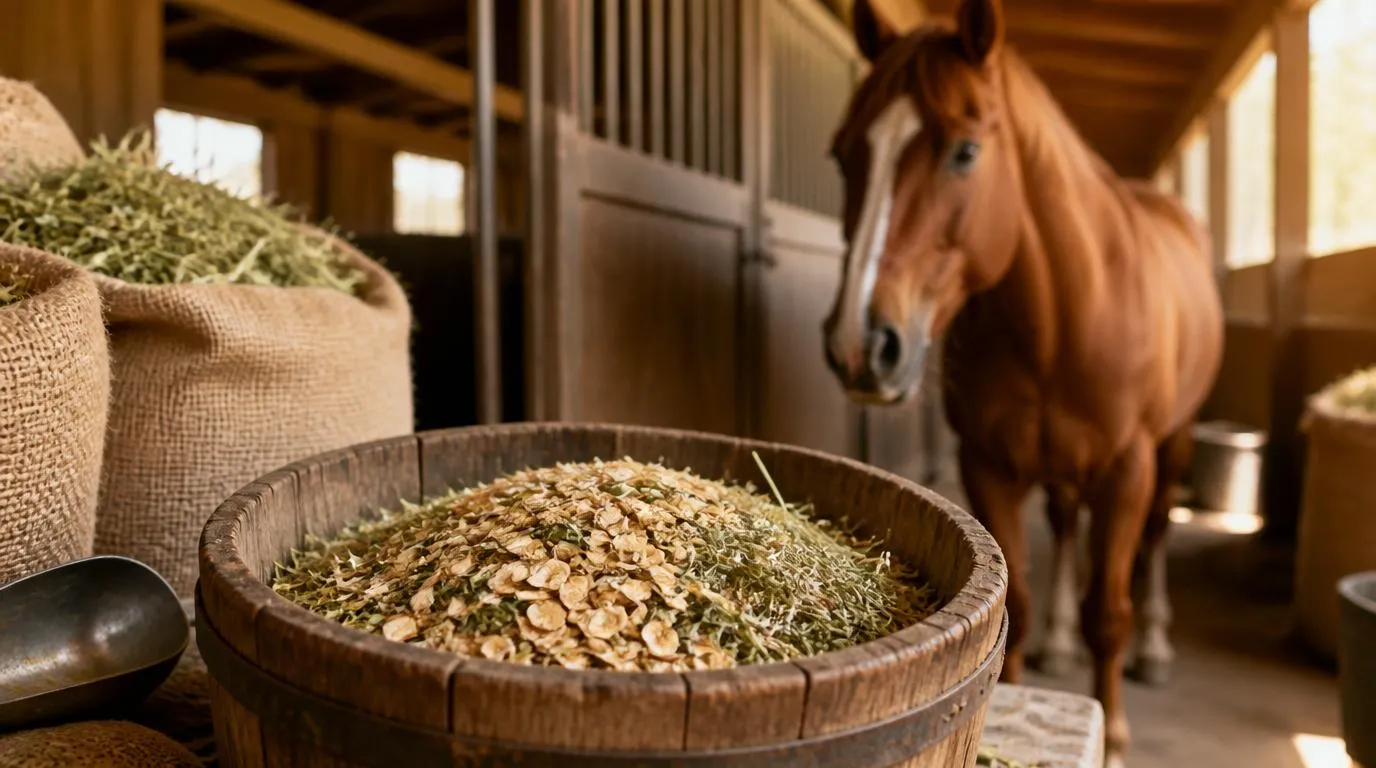
Complete Guide to Homemade Horse Food for Beginners Image via AI Generated

Complete Guide to Homemade Horse Food for Beginners

Learn how to create balanced, nutritious homemade meals for your horse with vet-approved recipes for all life stages. This comprehensive guide covers everything from ingredient selection to proper supplementation for equine health.

Read Full Recipe

All Homemade Horse Food Recipes

Homemade Horse Food FAQs

Is homemade horse food better than commercial horse feed?

Homemade horse food can be beneficial when properly balanced, as it allows you to control the quality of ingredients and avoid fillers. However, commercial horse feeds are formulated by equine nutritionists to be complete and balanced. Homemade diets require careful planning to ensure all nutritional needs are met. Always consult with an equine veterinarian or nutritionist before switching to homemade food.

What supplements are necessary for homemade horse food?

Common supplements needed for homemade horse diets include calcium, phosphorus (in proper ratio), salt, trace minerals (copper, zinc, selenium), vitamins (especially vitamin E), and sometimes specific amino acids like lysine. The exact supplements depend on your horse's age, workload, and the base ingredients used. Never guess - work with an equine nutritionist to determine the right supplements and dosages.

How much homemade food should I feed my horse?

Horses typically need 1.5-2.5% of their body weight in total feed daily (including hay), with concentrates (grains/supplements) making up no more than 0.5% of body weight for most horses. A 1000 lb horse would need 15-25 lbs of total feed daily, with no more than 5 lbs of concentrates. However, these are estimates - your equine veterinarian can provide specific recommendations based on your horse's individual needs, workload, and body condition.

Can I feed my horse only homemade food without hay?

No, horses require long-stem forage (hay or pasture) for proper digestive health. Their digestive systems are designed for continuous grazing, and forage provides necessary fiber for gut motility and hindgut health. Homemade concentrates should supplement, not replace, good quality hay or pasture. Aim for at least 1-1.5% of body weight in hay daily (10-15 lbs for a 1000 lb horse).

How do I store homemade horse food?

Homemade horse food should be stored in airtight containers in a cool, dry place. Most homemade grain mixes can be stored for 1-2 months if kept properly. For longer storage, consider freezing portions. Always practice good food safety: use clean containers, avoid moisture, and check for mold or spoilage before feeding. Store supplements separately and add them fresh to each feeding.

How do I transition my horse to homemade food?

Transition gradually over 10-14 days: Start with 25% new homemade food mixed with 75% old feed for 3-4 days, then 50/50 for 3-4 days, then 75% new/25% old, finally 100% homemade food. Horses have sensitive digestive systems, so slow transitions are crucial to prevent colic or laminitis. Monitor manure consistency and appetite throughout the transition.

What grains are safest for homemade horse food?

Oats are generally the safest grain for horses as they're high in fiber and lower in starch. Other options include barley (should be processed), corn (high energy, use sparingly), and beet pulp (excellent fiber source). Always introduce new grains gradually and consider processing (rolling, crushing, or soaking) to improve digestibility.

How do I balance calcium and phosphorus in homemade horse food?

Horses require a calcium:phosphorus ratio between 1:1 and 3:1, ideally around 1.5-2:1. Grains are typically high in phosphorus and low in calcium, so you'll need to add calcium sources like limestone flour or alfalfa. Have your hay analyzed or work with an equine nutritionist to properly balance these crucial minerals.

Are there any human foods that are dangerous for horses?

Yes, several human foods are toxic to horses including: chocolate, caffeine, onions, garlic, avocados, stone fruits with pits, potatoes (especially green ones), and anything moldy. Also avoid feeding large quantities of brassicas (cabbage, broccoli) which can cause gas and colic. Always research before adding any human food to your horse's diet.