
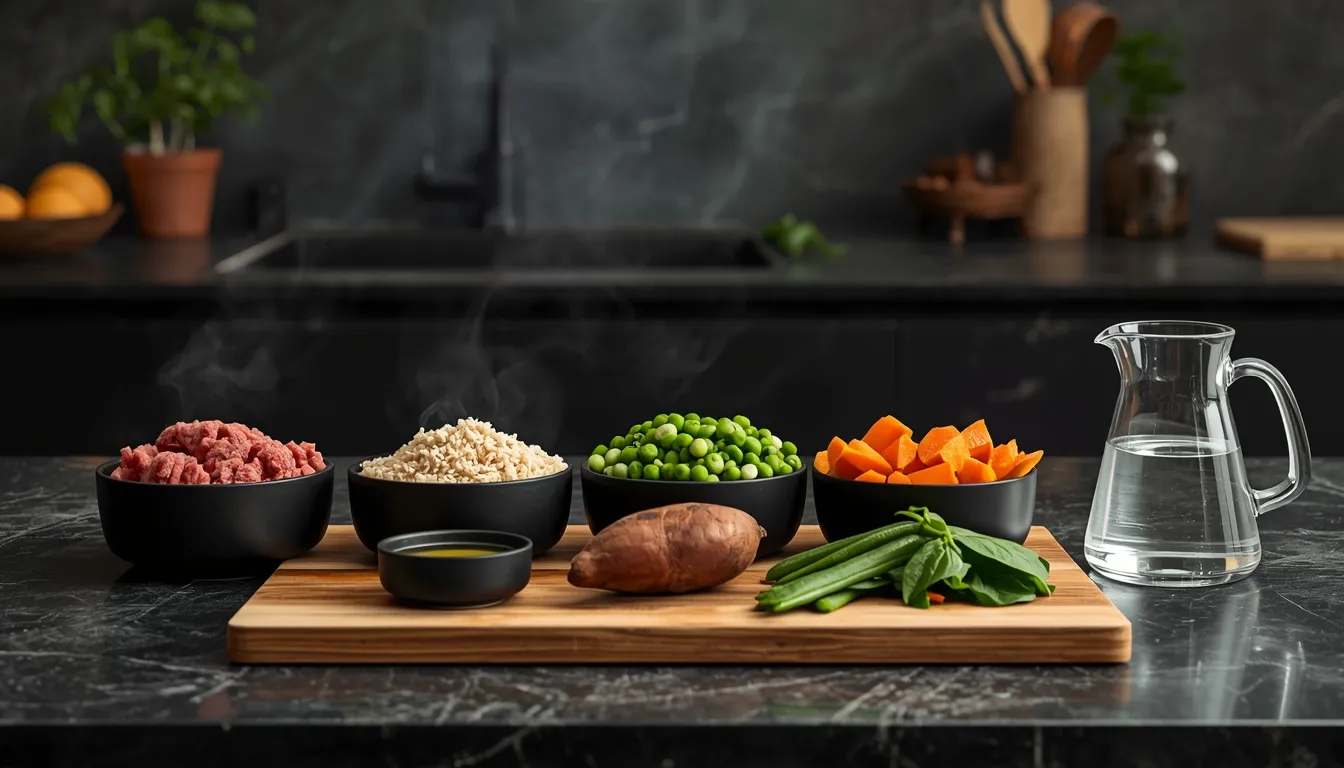
Complete Guide to Homemade Dog Food Image via AI Generated

Complete Guide to Homemade Dog Food

Learn how to create balanced, nutritious homemade meals for your dog with vet-approved recipes for all life stages. This comprehensive guide covers everything from ingredient selection to proper supplementation.

Read Full Recipe

All Homemade Dog Food Recipes

Homemade Dog Food FAQs

How much homemade food should I feed my dog?

As a general guideline, adult dogs need about 2-3% of their body weight in food daily. For example, a 50-pound dog would need 1 to 1.5 pounds of food per day, split into two meals. Puppies, active dogs, and senior dogs have different requirements. Always consult your veterinarian for personalized feeding recommendations based on your dog's age, weight, activity level, and health status.

What supplements do dogs need in homemade food?

Most homemade dog diets require supplementation to be nutritionally complete. Essential supplements include: calcium (especially for meat-based diets), omega-3 fatty acids (fish oil), vitamin E, and often a multivitamin formulated for dogs. The exact supplements and dosages depend on the specific recipe and your dog's needs. Never use human supplements - consult a veterinary nutritionist for proper recommendations.

Can I feed my dog a vegetarian or vegan diet?

Dogs are omnivores but thrive best on meat-based diets. While dogs can survive on carefully balanced vegetarian diets, vegan diets are more challenging and potentially risky. If you choose a plant-based diet for your dog, you must work closely with a veterinary nutritionist to ensure all essential nutrients (especially protein, taurine, vitamin B12, and certain amino acids) are adequately provided through supplementation.

What foods are toxic to dogs?

Never feed your dog: chocolate, grapes, raisins, onions, garlic, xylitol (artificial sweetener), alcohol, caffeine, macadamia nuts, avocado, raw dough, or foods high in salt or fat. Also avoid cooked bones which can splinter. Always research any new ingredient before adding it to your dog's homemade food.

How do I transition my dog to homemade food?

Transition gradually over 7-10 days: Start with 25% new homemade food mixed with 75% old food for 2-3 days, then 50/50 for 2-3 days, then 75% new/25% old, finally 100% homemade food. Watch for digestive upset and adjust the transition period if needed. Some dogs with sensitive stomachs may need a slower transition over 2-3 weeks.

How long does homemade dog food last?

Homemade dog food should be refrigerated in airtight containers and used within 3-4 days. For longer storage, freeze individual portions in freezer-safe containers or bags for up to 3 months. Always thaw frozen food in the refrigerator, never at room temperature. Discard any uneaten food that has been at room temperature for more than 2 hours.

Do I need to cook meat for my dog's homemade food?

Cooking meat is recommended to kill potential pathogens like Salmonella and E. coli that can sicken both dogs and humans. While some advocate for raw diets, they carry higher risks. If you choose raw feeding, use human-grade meat, practice excellent food safety, and freeze meat for at least 3 weeks to kill parasites. Always consult your veterinarian about the risks and benefits.

Can I use the same recipe for puppies and adult dogs?

No, puppies have different nutritional requirements than adult dogs. Puppy food needs higher protein, fat, calcium, and phosphorus to support growth and development. Using adult dog recipes for puppies can lead to nutritional deficiencies. Always use recipes specifically formulated for puppies during their first year of life.

How do I know if my homemade dog food is balanced?

The best way to ensure balance is to work with a veterinary nutritionist who can analyze your recipes. Look for recipes that follow AAFCO (Association of American Feed Control Officials) guidelines or have been formulated by veterinary nutritionists. Warning signs of imbalance include: dull coat, weight changes, digestive issues, or changes in energy levels.