
How to Make Homemade Rabbit Food for Pet Rabbits
Fresh, nutritious greens bowls and hay-based treats – perfect for happy, healthy bunnies.
Read Full RecipeDiscover 30+ vet-approved homemade rabbit food recipes for baby, adult, and senior rabbits. Create balanced, nutritious meals with our comprehensive guides.
Explore All Recipes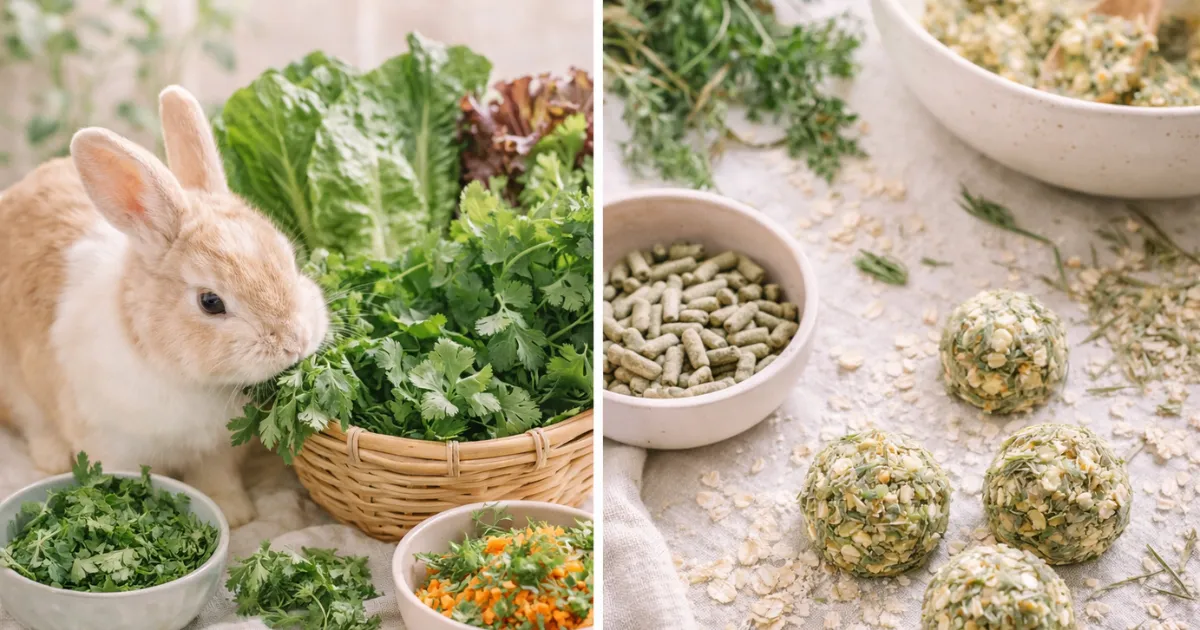 Image via AI Generated
Fresh, nutritious greens bowls and hay-based treats – perfect for happy, healthy bunnies.
Read Full RecipeHigh-quality hay should make up 80-90% of a rabbit's diet. Timothy hay is ideal for adult rabbits, while alfalfa hay is recommended for baby rabbits due to its higher calcium and protein content. Hay is essential for dental health, digestive function, and preventing gastrointestinal stasis.
Safe vegetables for rabbits include romaine lettuce, kale, cilantro, parsley, dandelion greens, bell peppers, zucchini, cucumber, broccoli leaves, celery, and carrot tops (not carrots themselves). Introduce new vegetables gradually to avoid digestive upset. Avoid iceberg lettuce as it has little nutritional value.
A general guideline is approximately 1 cup of fresh vegetables per 2 pounds of body weight daily. Unlimited hay should always be available. Pellets should be limited to 1/4 cup per 5 pounds of body weight for adult rabbits. Baby rabbits can have unlimited alfalfa-based pellets until 6 months old.
Fruits should be considered treats and given sparingly due to their high sugar content. Suitable fruits include apple (without seeds), banana, berries, melon, and pear. Limit fruit to 1-2 tablespoons per 5 pounds of body weight, 2-3 times per week maximum. Never feed fruit seeds or pits.
Toxic foods for rabbits include avocado, chocolate, iceberg lettuce, rhubarb, potatoes, tomato leaves and stems, onion family plants, nuts, seeds, corn, beans, peas, dairy products, meat, and processed human foods. Some houseplants are also toxic, so research before offering any new plant material.
Transition gradually over 2-3 weeks: Start with 90% old diet/10% new vegetables for 3-4 days, then 75/25 for 3-4 days, 50/50 for 3-4 days, 25/75 for 3-4 days, then 100% new diet. Monitor droppings closely - they should remain consistent in size and shape. If soft stools develop, slow the transition.
Generally, no. A balanced diet of unlimited hay, fresh vegetables, and limited pellets provides all necessary nutrients. Exception: indoor rabbits may need vitamin D supplementation if they get no natural sunlight. Always consult a rabbit-savvy veterinarian before adding supplements.
Hay should be available 24/7. Fresh vegetables should be offered twice daily - morning and evening. Pellets can be given once daily, preferably in the evening. Fresh water must be available at all times, changed daily. Rabbits are crepuscular (most active at dawn and dusk), so align feeding with these times.
Healthy signs: consistent appetite, round dry droppings (cecotropes are moist and usually eaten directly), normal energy levels, clean bottom (no feces stuck), healthy weight, shiny coat, clean teeth (no overgrowth), and no gastrointestinal issues. Any changes in these areas warrant veterinary attention.