
How to Make Homemade Rat Food for Pet Rats
Simple, nutritious recipes with grains, seeds, veggies, and protein to keep your rats healthy and happy.
Read Full GuideDiscover vet-approved homemade rat food recipes for baby, adult, and senior rats. Create balanced, nutritious meals with natural ingredients and step-by-step guides.
Explore Rat Food Recipes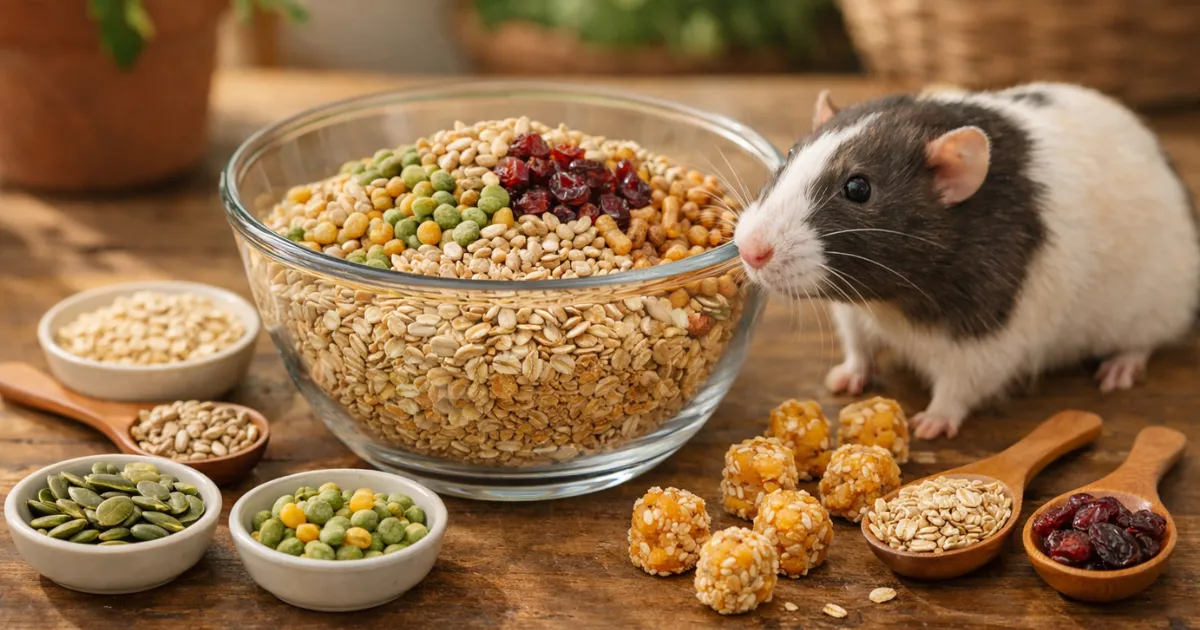 Image via AI Generated
Simple, nutritious recipes with grains, seeds, veggies, and protein to keep your rats healthy and happy.
Read Full GuideAdult pet rats require 12-16% protein in their diet, while growing baby rats and pregnant/nursing females need 16-20%. Too much protein can cause kidney issues in adult rats, while too little can stunt growth in young rats. Balance is key - include protein sources like cooked chicken, eggs, legumes, and quality rat pellets in moderation.
Yes, rats should have fresh vegetables daily and fruits 2-3 times per week. Vegetables provide essential vitamins and fiber, while fruits offer natural sugars and antioxidants. Limit fruits to prevent obesity and dental issues. Always wash produce thoroughly and introduce new foods gradually to prevent digestive upset.
Rats should never eat: raw beans, green potatoes, potato eyes, green bananas, raw sweet potatoes, rhubarb, chocolate, caffeine, alcohol, moldy foods, or foods with artificial sweeteners (especially xylitol). Also avoid citrus fruits for male rats due to kidney issues, and limit spinach and beet greens due to oxalates.
An average adult rat needs 15-20 grams of dry food per day (about 1-2 tablespoons), plus fresh vegetables. Growing rats need more - up to 30 grams daily. Divide food into two meals (morning and evening) and remove uneaten fresh food after a few hours to prevent spoilage. Adjust amounts based on your rat's activity level and weight.
If you're feeding a complete homemade diet without commercial rat pellets, consider adding a small animal vitamin/mineral supplement. However, if you're supplementing with high-quality rat blocks (30-50% of diet), additional supplements are usually unnecessary. Always provide a cuttlebone or mineral block for calcium and dental health.
Transition gradually over 7-10 days: Start with 25% new food mixed with 75% old food for 2-3 days, then 50/50 for 2-3 days, then 75% new/25% old, finally 100% new food. Watch for digestive changes and adjust the transition period if needed. Some sensitive rats may need a slower transition over 2 weeks.
A balanced grain mix includes: 40% grains (oats, barley, millet, quinoa), 30% seeds (pumpkin, sunflower, flax), 20% legumes (lentils, split peas), and 10% dried vegetables/fruits. Avoid corn as a primary grain due to potential mold and low nutrition. Whole grains are better than processed ones for dental health and digestion.
Yes, rats can thrive on a well-planned vegetarian diet. Include protein sources like cooked legumes, tofu, tempeh, eggs, and dairy. Monitor protein intake carefully and consider supplementing with taurine if no animal proteins are included. Consult with an exotic pet veterinarian when planning a vegetarian diet for your rats.
Dry grain mixes can be stored in airtight containers in a cool, dark place for up to 2 months. Fresh vegetables should be refrigerated and used within 3-5 days. Cooked foods should be refrigerated and used within 3 days, or frozen in portion-sized containers for up to 2 months. Always check for mold or spoilage before feeding.